

Those Vegan Cowboys — Amsterdam, Netherlands
Its product focus is dairy-identical casein designed to power cheese (and other casein-dependent applications like chocolate and sports nutrition) with melt, stretch and structure closer to conventional dairy than many plant-based cheeses. The commercial target is primarily B2B: supply casein into existing dairy-style manufacturing workflows. The technology is microbial fermentation producing casein (precision fermentation), positioning casein as the “structural” protein

Perfect Day — Berkeley, United States
This company produces animal-free whey proteins (as an ingredient platform) used to make dairy-style products such as milk, ice cream, cream cheese, and more—primarily by supplying ingredient partners rather than owning the entire consumer brand relationship. It historically used consumer brands to demonstrate market viability but has since reoriented toward B2B ingredient supply. The technology is precision fermentation: engineered microbes

Formo — Berlin, Germany
This company sells animal-free cheese alternatives and is progressing toward dairy products that incorporate dairy-identical proteins; it is also publicly working on an egg substitute, but its retail footprint so far is strongest in cheese-style products. Its current products include spreads and soft cheese formats distributed through mainstream retail channels in Germany and Austria. Its approach blends fermentation strategies: it

Imagindairy — Israel
This company makes animal-free milk proteins intended for use across dairy categories (milk, yoghurt, cheese, ice cream), primarily as B2B ingredients that established food companies can use to bring “cow-free dairy” to market. Public communications highlight collaboration with major food groups to place finished products into consumer channels. The technology is precision fermentation: engineered microbes produce dairy proteins (including beta‑lactoglobulin
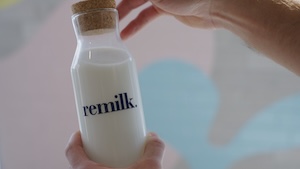
Remilk — Israel
This company produces “cow-free” dairy proteins for milk and dairy beverages, and has moved beyond pilots into branded consumer products through partnership with established dairy manufacturers. Its initial consumer-facing focus includes drinking milk (including barista-style milk for cafés) and flavoured varieties, targeting mainstream dairy consumers through familiar SKUs. The technology is precision fermentation: genetically programmed microbes produce specific dairy proteins

Avant Meats — Singapore
This company has been associated with cultivated fish products aimed at Asian culinary use-cases, including high-value and culturally specific seafood items (e.g., fish maw), positioning itself in a niche where conventional supply has ecological and cost volatility. Its product strategy has typically been described as moving from tastings to foodservice-first commercialisation, then retail later. Public descriptions outline a fish cell

Finless Foods — Emeryville, United States
Its long-term product goal is cell-cultured tuna (often framed around bluefin tuna) for food markets that are under sustainability pressure. The company has also engaged in plant-based offerings historically, but its stated long-term focus remains cell‑cultured seafood starting with tuna. Its technology is fish cell cultivation: proliferating fish cells in culture and translating that biomass into tuna-like food products. Public-facing

Umami Bioworks — Singapore, Singapore
This company has positioned itself as both a cultivated-seafood developer and a bioplatform provider, working across seafood product development and broader marine bio-innovation. It has also expanded its footprint into Europe via operations in Wageningen to support R&D and ecosystem partnerships. A major strategic change was a merger with Shiok Meats (reported as completed in 2024), which broadened capability into crustaceans such as shrimp/prawn

BlueNalu — San Diego, United States
This company is developing cultivated finfish products (notably high-value species such as bluefin tuna cuts) with a target market that begins in premium channels and expands as capacity grows. Public updates emphasise delivering sashimi-grade and culinary-grade products for foodservice and strategic distributors. Its platform is described as cell-cultured seafood production, with the company also highlighting food-safety systems and third-party certification

Wildtype — San Francisco, United States
This company’s lead product is sushi-grade cultivated salmon, aimed squarely at raw and “chef-forward” applications (sashimi, crudo, ceviche-style dishes) where product quality and storytelling can support early adoption. It has been positioned as a landmark for cell-cultivated seafood entering real menus rather than remaining limited to private tastings. Its process, described publicly, cultivates salmon cells under controlled conditions to create

PARIMA — Paris, France
This company was formed through consolidation: cultivated foie gras pioneer Gourmey acquired cultivated chicken producer Vital Meat and the combined entity operates under the PARIMA name. Its portfolio spans cultivated chicken (for mainstream poultry formats) and cultivated duck (used for foie gras-style products), targeting premium foodservice first. Its technical platform is described as scalable cell cultivation with complementary strengths from the merger, combining avian
SuperMeat — Tel Aviv, Israel
Its core product focus is cultivated chicken for human food, with a long-running emphasis on building an end-to-end platform that can reach commercial pricing and volumes. The company has signalled European ambitions, positioning chicken as the first product category where cultivated meat may reach meaningful consumer penetration. The company describes growing chicken directly from cells, implying avian cell lines expanded