
If you’re trying to understand which energy technologies truly matter for protecting nature today, the picture is becoming clearer. The biggest real-world impact is coming from technologies that are already widely used, rapidly growing, and becoming more affordable—especially solar, wind, energy storage, and the smart systems that manage electricity efficiently. Other technologies still play important roles, but they are either limited by geography, designed for specific industries, or still developing.
In simple terms, the technologies at the top of this list are the ones already reducing pollution and replacing fossil fuels at a large scale. Others, while promising, are either not yet widely deployed or are still too expensive or complex to have a major global impact right now.
Based on how much these technologies are currently used, how much they reduce environmental damage, and how quickly they can scale globally, the general order is: solar panels, wind turbines, advanced battery storage, smart grids, demand-response systems, small-scale hydropower, geothermal energy, floating solar farms, green hydrogen, tidal and wave energy, and finally nuclear fusion.
Think of it like this: some technologies are already “doing the heavy lifting” for the planet today, while others are more like future tools that still need time to mature. Solar and wind are already transforming energy systems worldwide, while technologies like hydrogen or fusion are still building their role.
Mature renewable power
Solar panels and photovoltaics
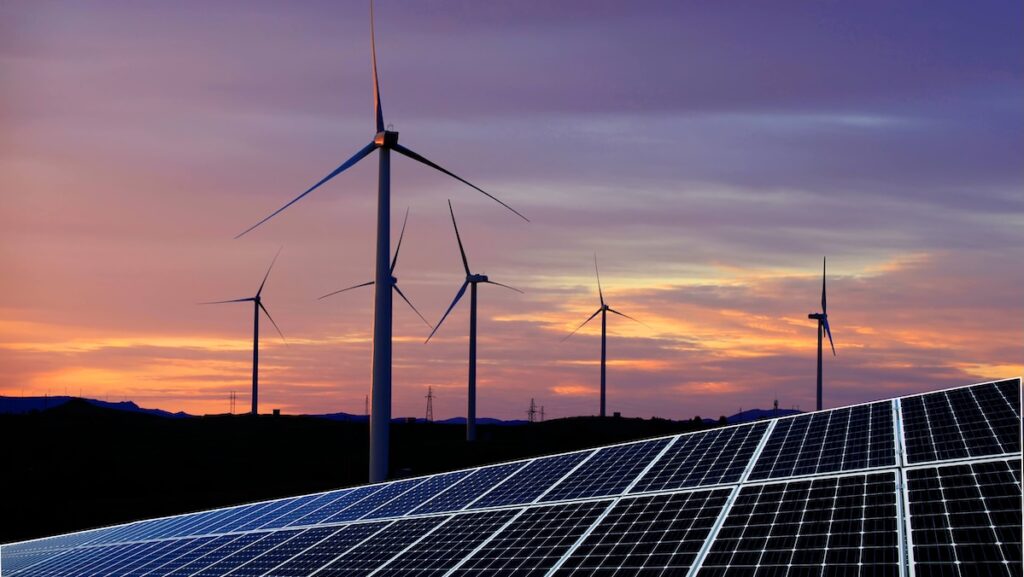
Solar panels, also called photovoltaics (PV), convert sunlight directly into electricity using special materials called semiconductors. What makes solar so powerful is not just the science—it’s the scale. Solar power is now used everywhere, from small rooftops to massive solar farms covering several square kilometers (or miles).
For example, large solar farms in deserts like those in India, China, or the southwestern United States generate electricity for millions of people. Even a small rooftop system can power a home, reducing dependence on fossil fuels.
Solar energy helps nature by replacing electricity that would otherwise come from burning coal, oil, or gas. No combustion means no air pollution during operation. It’s also highly flexible—whether in a remote village or a dense city, solar can be adapted almost anywhere sunlight is available.
Wind turbines
Wind turbines generate electricity by capturing the energy of moving air. When wind spins the blades, it turns a generator that produces electricity. You’ve probably seen them in open plains, along coastlines, or offshore in the ocean.
In regions like northern Europe or the central United States, wind farms stretch across landscapes where steady winds make them extremely efficient. Offshore wind farms, located several kilometers (miles) from shore, can capture even stronger and more consistent winds.
Wind energy is important because it produces large amounts of electricity without burning fuel. It’s one of the most cost-effective clean energy sources today and plays a major role in reducing greenhouse gas emissions globally.
Grid flexibility and system intelligence
Advanced battery storage
Battery storage systems store electricity and release it when needed. For example, solar panels produce the most energy during midday, but people often use more electricity in the evening. Batteries bridge this gap.
Modern grid-scale batteries can store enough electricity to power thousands of homes for several hours. Some battery installations are as large as football fields, storing energy that stabilizes entire regional grids.
They matter because they make renewable energy reliable. Without storage, excess solar or wind energy might go to waste. With batteries, that energy can be saved and used later—reducing the need for fossil-fuel backup systems.
Smart grids
A smart grid is an electricity network that uses digital technology to monitor and manage energy flow in real time. Instead of simply delivering electricity one way, it responds dynamically to changes in supply and demand.
For example, if a city suddenly uses more electricity during a heatwave (say 35°C / 95°F), a smart grid can quickly adjust distribution, reduce overload risks, and prioritize critical systems.
Smart grids are essential because they make the entire energy system more efficient. They reduce energy loss, prevent blackouts, and allow renewable energy sources to be integrated more smoothly.
Demand-response systems
Demand response is a simple but powerful idea: instead of always increasing supply, we sometimes adjust demand. This means shifting electricity use to times when clean energy is abundant.
For example, a smart thermostat might slightly adjust air conditioning during peak demand, or a factory might schedule energy-intensive processes when renewable energy is available.
These systems matter because they reduce strain on the grid without building new power plants. In many cases, saving or shifting 1 kilowatt (kW) of demand can be just as valuable as generating 1 kW of electricity.
Proven but geography-limited generation
Small-scale low-impact hydropower
Small hydropower systems generate electricity from flowing water, often without large dams. These systems can be installed in rivers or streams and typically produce up to about 10 megawatts (MW) of power.
In mountainous regions like Nepal or parts of South America, small hydro systems provide reliable electricity to remote communities without massive infrastructure.
However, their environmental impact depends heavily on design. Poorly planned systems can disrupt fish migration or river ecosystems, while well-designed systems can provide clean energy with minimal harm.
Geothermal energy
Geothermal energy uses heat from beneath the Earth’s surface. In some places, this heat naturally rises close to the surface, allowing it to be used for electricity or heating.
Countries like Iceland and parts of East Africa use geothermal energy extensively because of their geological conditions. In these regions, geothermal plants provide stable, around-the-clock energy.
Unlike solar or wind, geothermal energy doesn’t depend on weather. It provides constant power, making it a valuable complement to other renewable sources.
Floating solar farms
Floating solar farms place solar panels on water surfaces such as reservoirs, lakes, or even calm coastal areas. This approach saves land space and can slightly improve efficiency because water helps keep panels cool.
For example, large floating solar projects in Southeast Asia are built on hydropower reservoirs, combining two energy systems in one location.
Floating solar is useful in densely populated regions where land is limited, but it requires careful planning to avoid affecting aquatic ecosystems.
Emerging industrial and ocean solutions
Green hydrogen
Green hydrogen is produced by splitting water into hydrogen and oxygen using renewable electricity. The process is called electrolysis.
Hydrogen can then be used as a fuel, especially in industries where electricity alone is not enough—like steel production, shipping, or aviation.
Right now, green hydrogen is still expensive and not widely used. But in the future, it could help reduce emissions in some of the hardest-to-decarbonize sectors.
Tidal and wave energy
Tidal and wave energy capture the movement of the ocean to generate electricity. Tidal systems often work like underwater wind turbines, while wave systems use floating devices that move with the water.
In places with strong tides—like parts of the United Kingdom or Canada—these systems have great potential. The key advantage is predictability: tides follow reliable patterns.
However, the ocean is a harsh environment, and these technologies are still developing. High costs and engineering challenges currently limit their widespread use.
Long-range frontier
Nuclear fusion
Nuclear fusion aims to replicate the process that powers the Sun, where atomic nuclei combine and release large amounts of energy.
If successfully developed, fusion could provide nearly limitless, low-carbon energy. The fuel (like hydrogen isotopes) is abundant, and the process produces far less long-lived waste than traditional nuclear power.
But fusion is still experimental. Even though scientists have made major progress—such as achieving controlled energy releases—commercial fusion power plants are likely still decades away.
For now, fusion represents a powerful future possibility rather than a present-day solution—but one worth watching closely.