
Writing this article about cultivated leather was one of the most difficult parts of this review series. Unlike cultivated meat or other well-discussed biotechnology topics, lab-grown leather still exists in a strange scientific gray area: widely talked about, heavily marketed, but only lightly supported by independent research. While researching this article, I found surprisingly few strong studies, environmental assessments, or large-scale investigations focused specifically on cultivated leather and other biofabricated animal-derived materials.
That does not make the topic unimportant. If anything, it makes it more fascinating.
Many companies present cultivated leather as a sustainable alternative to conventional animal leather and plastic-based synthetic leather, yet some of the most important questions still remain unanswered. How environmentally sustainable is cultivated leather really? Can it ever scale beyond luxury fashion experiments? Is it biologically similar to real leather, or simply inspired by it? And how much of the public conversation is driven by scientific reality versus branding and speculation?
In many ways, the lack of clear answers became the most important finding of this research. The field contains enormous scientific and industrial gaps, which also means it offers enormous opportunities for future research, innovation, and scrutiny.
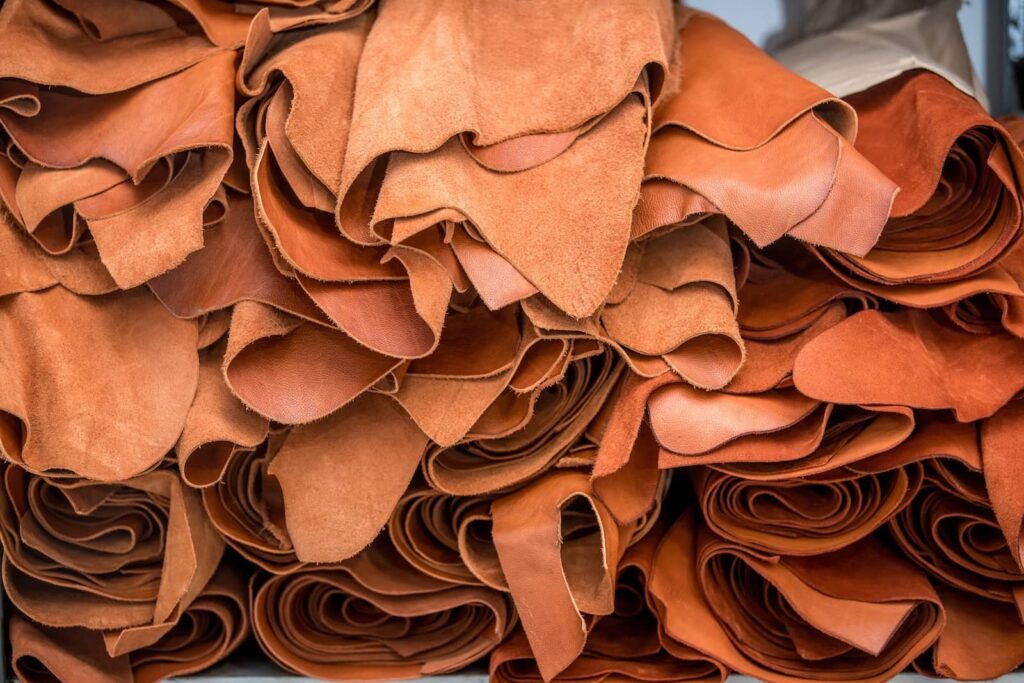
What is cultivated leather, and could it replace animal leather?
Cultivated leather is a leather-like material made with biotechnology rather than by removing and processing an animal hide. In its strictest form, it uses animal-derived cells or bio-produced collagen to build a material that imitates the collagen-rich structure of leather. It could replace some animal leather uses, especially luxury accessories, fashion panels, and possibly automotive or furniture surfaces, but it is not yet proven as a full replacement for conventional hides at mass scale.
The key uncertainty is not whether scientists can make leather-like material. They can. The harder question is whether cultivated leather can match the structure, durability, cost, feel, aging behavior, and industrial availability of animal leather across millions of square meters. Current evidence supports cultivated leather as a promising emerging material, not yet a confirmed global substitute for animal leather.
How do scientists create cultivated leather without using animal hides?
Cultivated leather is usually made by producing collagen, the main structural protein that gives leather much of its strength and texture, then organizing that collagen into sheets or layered materials that can be tanned, finished, colored, and treated like leather. One technical pathway uses collagen-secreting cells; another uses fermentation systems, such as engineered yeast, to make animal-free collagen-like proteins.
In simple terms, the process is: choose a biological source, produce collagen or collagen-forming cells, assemble the material into a sheet, stabilize it, then finish it for appearance and performance. This borrows ideas from tissue engineering, biomaterials science, and leather tanning.
What makes cultivated leather different from vegan leather and synthetic leather?
Cultivated leather is different because it is based on biological leather-like building blocks, especially collagen. Synthetic leather is usually plastic-based, commonly using polyurethane (PU) or polyvinyl chloride (PVC). Vegan leather is a broader marketing category: it simply means no animal-derived leather, but it may be plastic-based, plant-blended, mycelium-based, recycled, or biofabricated.
This is why people online often argue that “vegan leather is just plastic.” Sometimes that criticism is accurate for PU/PVC materials, but it does not describe every leather alternative. Cultivated leather sits in a different category from ordinary faux leather because it tries to recreate leather’s biological structure rather than merely imitate the surface.
Can companies really grow leather from animal cells without raising or slaughtering animals?
Yes, at least at prototype and early commercial-material levels. Tissue-engineering research has shown that leather-like material can be biofabricated from collagen-producing cells. Companies have also worked on producing collagen through biotechnology rather than harvesting full animal hides. PBS reported on Modern Meadow’s lab-grown collagen-based leather substitute as far back as 2018.
But “without slaughter” does not always mean “without any animal involvement.” Some methods may begin with animal cells, biopsies, or animal-derived biological information. Other approaches aim for animal-free collagen using fermentation. The exact answer depends on the company, material, and production method.
Is cultivated leather biologically identical to conventional leather, or only similar?
Usually, it is better described as biologically inspired or leather-like, not automatically identical. Conventional leather comes from animal skin, which has a complex, naturally grown architecture: collagen fiber bundles, grain layers, pores, thickness variation, and species-specific structures. Cultivated leather may contain collagen or collagen-like material, but collagen alone does not guarantee the same architecture as a full hide.
That distinction matters. A material can feel and perform like leather in some uses without being a complete biological copy of cowhide. The strongest claim supported by current evidence is “similar to leather” or “engineered from leather-like biological components,” not universally “identical to leather.”
References
- Jakab et al. — Non-medical applications of tissue engineering: biofabrication of a leather-like material
- Birlie — Transforming the Leather Industry: A Comprehensive Review on Leather Alternatives
- PBS NewsHour — This leather substitute is grown in a New Jersey lab
Why are people so emotionally divided about cultivated leather?
Cultivated leather creates strong emotional reactions because it sits between biology, fashion, ethics, and technology. It promises the appearance and feel of leather without traditional animal hides, but it also challenges long-standing ideas about what leather represents: nature, craftsmanship, luxury, and authenticity.
Supporters often see cultivated leather as a more ethical alternative that could reduce animal slaughter and some environmental problems linked to livestock and tanning. For them, biotechnology offers a compromise between sustainability and the cultural appeal of leather products.
Skeptics react to it very differently. Many people value leather precisely because it comes from natural animal skin shaped by age, genetics, and traditional processing. Moving leather production into laboratories and bioreactors can make the material feel artificial, industrial, or emotionally disconnected from traditional craftsmanship.
Confusion also drives much of the debate. Consumers often struggle to understand whether cultivated leather is:
- truly animal-free,
- biologically “real” leather,
- another form of plastic-based vegan leather,
- or mainly sustainability marketing.
Because the technology is still new and lacks clear public standards, online discussions frequently blur together ethics, science, luxury branding, and distrust of “green” marketing claims.
Are cows still involved in cultivated leather production?
In most current approaches, yes, at least indirectly. Many cultivated leather systems begin with animal-derived cells, collagen-producing cells, or biological reference materials taken from animals such as cows. The key difference is that companies are trying to avoid repeatedly raising and slaughtering entire animals for hides.
Some companies use small biopsies from living animals to obtain starter cells. Others use engineered microorganisms, such as yeast, to produce collagen-like proteins through fermentation. The degree of animal involvement therefore varies significantly between companies and technologies.
This distinction matters because public understanding often collapses all cultivated materials into a single category. Online discussions frequently reveal confusion between:
- slaughter-free,
- animal-free,
- vegan,
- and bio-based.
Those terms are not interchangeable. A cultivated leather product might reduce slaughter dramatically while still using animal-origin cells somewhere in the production chain.
Could cultivated leather reduce animal suffering, or would it mostly change luxury branding and supply chains?
Potentially both, but the scale matters enormously. If cultivated leather became cheap, durable, and scalable enough to replace large portions of conventional leather production, it could reduce demand for animal hides and potentially reduce parts of the livestock system connected to leather production.
However, leather is economically tied to the global meat industry. In many cases, hides are treated as co-products of cattle production rather than the main reason animals are raised. That means replacing leather alone would not automatically eliminate livestock farming.
In the near term, cultivated leather is more likely to appear first as a premium biomaterial in luxury fashion, limited-edition products, automotive interiors, or sustainability-focused branding. Many biotech-material companies are currently positioning themselves within high-end design markets because the materials remain expensive and difficult to scale.
This is why online debates often split into two opposing interpretations:
- cultivated leather as a genuine ethical and environmental innovation,
- or cultivated leather as luxury-industry green branding that changes marketing faster than agriculture itself.
Why do Reddit discussions often confuse cultivated leather with plastic-based vegan leather?
Because the public category “vegan leather” already contains many completely different materials. Online discussions often lump together:
- polyurethane leather,
- PVC leather,
- cactus leather,
- mushroom leather,
- pineapple-fiber leather,
- recycled leather,
- and cultivated collagen materials.
That creates constant confusion about what cultivated leather actually is.
Much of the confusion comes from the fact that many consumers learned to associate “vegan leather” with low-cost synthetic plastics that peel, crack, or shed microplastics. As a result, discussions about cultivated leather frequently inherit criticism aimed at ordinary faux leather, even when the underlying material science is very different.
The terminology problem is made worse by marketing language. Companies often emphasize words like “bio,” “eco,” “green,” or “animal-free” without clearly explaining whether a material is collagen-based, plant-based, fungal, petroleum-derived, or hybridized with plastics. Public conversations then become arguments about durability, sustainability, and authenticity rather than precise material composition.
Are luxury fashion brands genuinely interested in cultivated leather, or mainly using it for sustainability marketing?
Luxury fashion companies appear genuinely interested in biomaterials, but branding is clearly part of the appeal. The fashion industry faces increasing pressure around deforestation, traceability, animal welfare, emissions, and chemical-intensive tanning processes. Cultivated leather offers a way for brands to signal innovation while preserving the visual and tactile identity associated with leather products.
At the same time, many cultivated leather projects remain experimental or extremely limited in scale. Fashion companies frequently showcase prototype materials, partnerships, or concept products long before large-scale manufacturing exists. This contributes to public skepticism that some cultivated leather announcements function more as sustainability storytelling than industrial transformation.
Still, luxury fashion has strong incentives to invest in these materials. High-end brands depend heavily on exclusivity, material innovation, and future-oriented identity. Even if cultivated leather remains niche for years, it aligns closely with the luxury sector’s interest in premium sustainable materials and controlled supply chains.
References
- Jakab et al. — Non-medical applications of tissue engineering: biofabrication of a leather-like material
- Birlie — Transforming the Leather Industry: A Comprehensive Review on Leather Alternatives
- FAO — Tackling Climate Change Through Livestock: Greenhouse Gas Emissions and Mitigation Opportunities
- Modern Meadow
- PBS NewsHour — This leather substitute is grown in a New Jersey lab
- AP News — Luxury brands face pressure over leather traceability and sustainability
Is cultivated leather actually more sustainable than conventional or synthetic leather?
Right now, there is not enough independent scientific evidence to confidently answer that question. Researchers and companies often present cultivated leather as a potential solution to some environmental problems associated with conventional leather, especially those linked to livestock production and chemical-intensive tanning. However, the available scientific literature mainly focuses on how cultivated or biofabricated leather can be produced, not on verified large-scale environmental performance.
Most environmental studies in the leather industry still compare:
- conventional bovine leather,
- plastic-based synthetic leather such as polyurethane (PU) and PVC,
- mycelium leather,
- or plant-based alternatives,
without directly including cultivated leather itself. This means many sustainability claims around cultivated leather remain theoretical rather than experimentally validated.
Could cultivated leather reduce livestock pollution and tanning impacts?
Possibly, but there is currently no strong peer-reviewed evidence directly measuring whether cultivated leather reduces methane emissions, deforestation, wastewater pollution, or toxic tanning impacts at industrial scale. Existing cultivated-leather research mentions environmental motivation as one reason for developing these materials, but does not provide robust life cycle assessments (LCAs) proving lower environmental impact.
What environmental questions about cultivated leather still remain unanswered?
Many major questions remain scientifically unresolved. We could not find strong independent evidence showing:
- how much energy large-scale cultivated leather manufacturing would require,
- how much water industrial production would consume,
- whether commercial products still depend on plastics or petroleum-derived coatings,
- or whether new environmental tradeoffs could emerge during scaling and disposal.
At the moment, the biggest scientific conclusion is actually the size of the evidence gap itself. Cultivated leather is widely discussed as a sustainable material, but rigorous environmental data remains very limited.
References
- Modern Meadow
- Jakab et al. — Non-medical applications of tissue engineering: biofabrication of a leather-like material
Why is cultivated leather so difficult and expensive to scale?
Cultivated leather is difficult to scale because making a small collagen-based sheet is not the same as producing large, consistent, durable material for bags, shoes, furniture, or car interiors. Leather is not just “collagen.” It has layered structure, fiber orientation, thickness, flexibility, tear strength, surface grain, and aging behavior. Jakab et al. describe biofabricated leather as a tissue-engineering process that moves from collagen-secreting cells to engineering, tanning, and finishing, which shows why production involves more than simply growing a flat sheet.
Why can scientists grow small leather samples but struggle to mass-produce full hides?
Small samples can prove that collagen-based leather-like material is technically possible. Mass production requires large sheets with uniform thickness, strength, flexibility, finish, and repeatability. Patents describe engineered collagen fibrils and layered structures, but patents are not independent proof that the process is already commercially cheap or scalable. Why are texture, thickness, durability, and flexibility so hard to engineer?
These qualities depend on collagen architecture, not just collagen presence. Research on leather tear strength shows that collagen fibril orientation affects mechanical performance. That helps explain why recreating leather’s structure is difficult: the material must look, bend, stretch, resist tearing, and survive finishing like animal leather.
Company claims suggest progress. Modern Meadow says its INNOVERA material is animal-free and scalable, but that is a company claim, not independent cost proof. Reuters also reports expert skepticism that collagen alone recreates traditional leather’s complex structure.
Which companies and research groups are currently leading cultivated leather development?
Modern Meadow is the most visible company in the cultivated or biofabricated leather space. Its early work was linked to collagen-based leather-like materials, and PBS NewsHour described the company as using biotechnology to produce a leather substitute grown from lab-made collagen. Today, Modern Meadow describes INNOVERA as a next-generation biofabricated leather alternative made from plant proteins, biopolymers, and recycled rubber, so its current material should not be described simply as “cell-grown cow leather.”
Lab-Grown Leather Ltd. and The Organoid Company have also appeared in recent reporting around experimental lab-grown leather projects, including a highly promotional T. rex collagen handbag. Reuters notes both the bioengineering claim and expert skepticism that collagen alone recreates traditional leather’s complex structure.
References
- Jakab et al. — Non-medical applications of tissue engineering: biofabrication of a leather-like material
- Google Patents — Biofabricated material containing collagen fibrils
- Kelly et al. — Artificially modified collagen fibril orientation affects leather tear strength
- Modern Meadow — Biofabricated leather materials
- Reuters — Dinosaur collagen used to create one-of-a-kind handbag
Could cultivated leather realistically change fashion and other industries, or remain a niche material?
Cultivated leather is currently positioned mainly as a premium biomaterial for fashion and design rather than a mass-market replacement for animal leather. Most visible development has focused on luxury fashion, accessories, and experimental materials branding. Public discussions show interest in buying lab-grown leather products, but also confusion about where such products are actually available, suggesting that commercial adoption remains limited.
There is also no strong independent evidence yet showing whether cultivated leather could scale cheaply enough to replace conventional leather across industries such as automotive interiors, footwear, or furniture. At the moment, the strongest evidence supports cultivated leather as an emerging niche material rather than a proven industrial replacement.
Could cultivated leather outperform conventional leather or reshape consumer markets?
Some patents and company materials claim biofabricated leather could offer more uniformity, fewer defects, and customizable properties compared with animal hides. However, these are mostly technical claims or company statements rather than independent commercial validation. Scientific literature confirms that engineering leather-like collagen structures is possible, but does not yet prove superior long-term durability or lower cost than traditional leather.
Consumer acceptance is also uncertain. Research on cultivated products suggests some consumers may pay more for ethical or innovative materials, but strong cultivated-leather-specific willingness-to-pay evidence is still limited.
Could regulation, labeling, and livestock economics limit cultivated leather adoption?
Possibly. Leather labeling rules in regions such as the European Union already regulate how leather-related terms can be used, and future debates may emerge over whether cultivated materials can legally be called “leather.” Similar naming debates already exist in cultivated meat and biomaterials industries.
Even if cultivated leather succeeds technologically, it may not dramatically reduce livestock production. Conventional leather is deeply connected to global cattle and meat industries, where hides are often treated as co-products rather than the main economic driver. This means cultivated leather could remain a premium parallel market instead of fully replacing animal leather.
References
- Jakab et al. — Non-medical applications of tissue engineering: biofabrication of a leather-like material
- Modern Meadow
- PBS NewsHour — This leather substitute is grown in a New Jersey lab
- European Commission — Textiles, leather and fur industries
- FAO — Tackling Climate Change Through Livestock
- Reddit — What companies are using lab-grown leather?
Cultivated leather remains one of the most intriguing and uncertain areas in the broader world of cultivated animal products. It sits between biotechnology, fashion, sustainability, and material science, yet many of the most important scientific questions are still unanswered. That uncertainty may be frustrating for consumers, but it also reveals how early this field truly is. For now, cultivated leather is less a finished revolution and more an open scientific and industrial experiment.
We hope that, in the future, we can return to some of the unanswered questions in this article with stronger evidence, clearer data, and better answers.
This article was created through research, curiosity, and a deep love for scientific exploration and unanswered questions by Niloofar Moharrami for Nested Questions.