Nested Questions logo featuring a magnifying glass integrated into the letter Q

What is Cultivated Leather?

Writing this article about cultivated leather was one of the most difficult parts of this review series. Unlike cultivated meat or other well-discussed biotechnology topics, lab-grown leather still exists in a strange scientific gray area: widely talked about, heavily marketed, but only lightly supported by independent research. While researching this article, I found surprisingly few strong studies, environmental assessments, or large-scale investigations focused specifically on cultivated leather and other biofabricated animal-derived materials.

That does not make the topic unimportant. If anything, it makes it more fascinating.

Many companies present cultivated leather as a sustainable alternative to conventional animal leather and plastic-based synthetic leather, yet some of the most important questions still remain unanswered. How environmentally sustainable is cultivated leather really? Can it ever scale beyond luxury fashion experiments? Is it biologically similar to real leather, or simply inspired by it? And how much of the public conversation is driven by scientific reality versus branding and speculation?

In many ways, the lack of clear answers became the most important finding of this research. The field contains enormous scientific and industrial gaps, which also means it offers enormous opportunities for future research, innovation, and scrutiny.
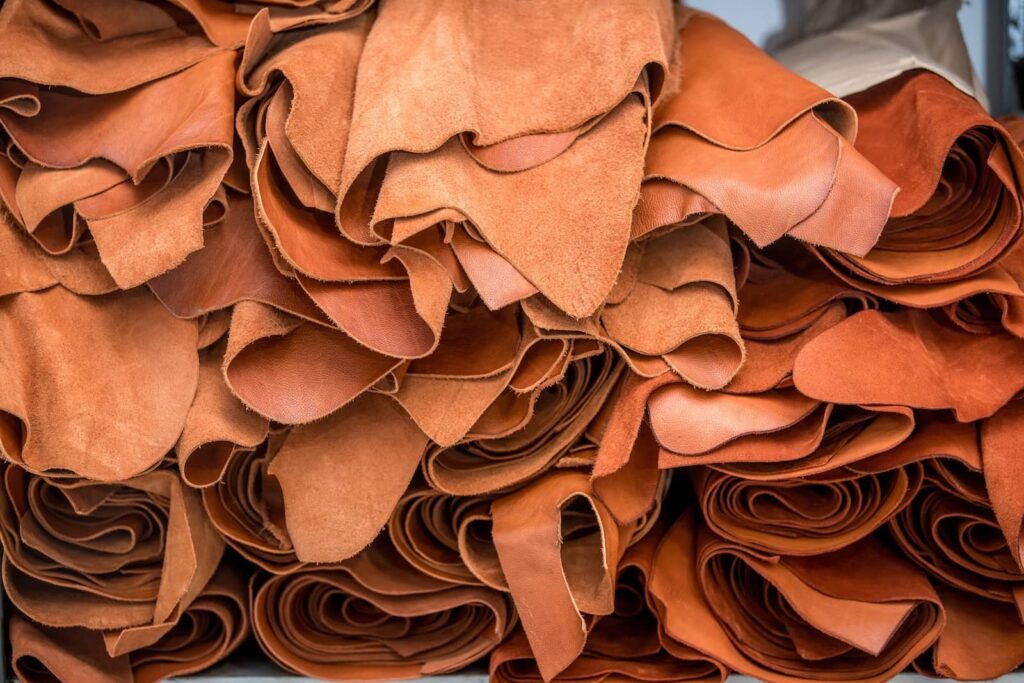
Leather

What is cultivated leather, and could it replace animal leather?

Cultivated leather is a leather-like material made with biotechnology rather than by removing and processing an animal hide. In its strictest form, it uses animal-derived cells or bio-produced collagen to build a material that imitates the collagen-rich structure of leather. It could replace some animal leather uses, especially luxury accessories, fashion panels, and possibly automotive or furniture surfaces, but it is not yet proven as a full replacement for conventional hides at mass scale.

The key uncertainty is not whether scientists can make leather-like material. They can. The harder question is whether cultivated leather can match the structure, durability, cost, feel, aging behavior, and industrial availability of animal leather across millions of square meters. Current evidence supports cultivated leather as a promising emerging material, not yet a confirmed global substitute for animal leather.

How do scientists create cultivated leather without using animal hides?

Cultivated leather is usually made by producing collagen, the main structural protein that gives leather much of its strength and texture, then organizing that collagen into sheets or layered materials that can be tanned, finished, colored, and treated like leather. One technical pathway uses collagen-secreting cells; another uses fermentation systems, such as engineered yeast, to make animal-free collagen-like proteins.

In simple terms, the process is: choose a biological source, produce collagen or collagen-forming cells, assemble the material into a sheet, stabilize it, then finish it for appearance and performance. This borrows ideas from tissue engineering, biomaterials science, and leather tanning.

What makes cultivated leather different from vegan leather and synthetic leather?

Cultivated leather is different because it is based on biological leather-like building blocks, especially collagen. Synthetic leather is usually plastic-based, commonly using polyurethane (PU) or polyvinyl chloride (PVC). Vegan leather is a broader marketing category: it simply means no animal-derived leather, but it may be plastic-based, plant-blended, mycelium-based, recycled, or biofabricated.

This is why people online often argue that “vegan leather is just plastic.” Sometimes that criticism is accurate for PU/PVC materials, but it does not describe every leather alternative. Cultivated leather sits in a different category from ordinary faux leather because it tries to recreate leather’s biological structure rather than merely imitate the surface.

Can companies really grow leather from animal cells without raising or slaughtering animals?

Yes, at least at prototype and early commercial-material levels. Tissue-engineering research has shown that leather-like material can be biofabricated from collagen-producing cells. Companies have also worked on producing collagen through biotechnology rather than harvesting full animal hides. PBS reported on Modern Meadow’s lab-grown collagen-based leather substitute as far back as 2018.

But “without slaughter” does not always mean “without any animal involvement.” Some methods may begin with animal cells, biopsies, or animal-derived biological information. Other approaches aim for animal-free collagen using fermentation. The exact answer depends on the company, material, and production method.

Is cultivated leather biologically identical to conventional leather, or only similar?

Usually, it is better described as biologically inspired or leather-like, not automatically identical. Conventional leather comes from animal skin, which has a complex, naturally grown architecture: collagen fiber bundles, grain layers, pores, thickness variation, and species-specific structures. Cultivated leather may contain collagen or collagen-like material, but collagen alone does not guarantee the same architecture as a full hide.

That distinction matters. A material can feel and perform like leather in some uses without being a complete biological copy of cowhide. The strongest claim supported by current evidence is “similar to leather” or “engineered from leather-like biological components,” not universally “identical to leather.”

References

Why are people so emotionally divided about cultivated leather?

Cultivated leather creates strong emotional reactions because it sits between biology, fashion, ethics, and technology. It promises the appearance and feel of leather without traditional animal hides, but it also challenges long-standing ideas about what leather represents: nature, craftsmanship, luxury, and authenticity.

Supporters often see cultivated leather as a more ethical alternative that could reduce animal slaughter and some environmental problems linked to livestock and tanning. For them, biotechnology offers a compromise between sustainability and the cultural appeal of leather products.

Skeptics react to it very differently. Many people value leather precisely because it comes from natural animal skin shaped by age, genetics, and traditional processing. Moving leather production into laboratories and bioreactors can make the material feel artificial, industrial, or emotionally disconnected from traditional craftsmanship.

Confusion also drives much of the debate. Consumers often struggle to understand whether cultivated leather is:

  • truly animal-free,
  • biologically “real” leather,
  • another form of plastic-based vegan leather,
  • or mainly sustainability marketing.

Because the technology is still new and lacks clear public standards, online discussions frequently blur together ethics, science, luxury branding, and distrust of “green” marketing claims.

Are cows still involved in cultivated leather production?

In most current approaches, yes, at least indirectly. Many cultivated leather systems begin with animal-derived cells, collagen-producing cells, or biological reference materials taken from animals such as cows. The key difference is that companies are trying to avoid repeatedly raising and slaughtering entire animals for hides.

Some companies use small biopsies from living animals to obtain starter cells. Others use engineered microorganisms, such as yeast, to produce collagen-like proteins through fermentation. The degree of animal involvement therefore varies significantly between companies and technologies.

This distinction matters because public understanding often collapses all cultivated materials into a single category. Online discussions frequently reveal confusion between:

  • slaughter-free,
  • animal-free,
  • vegan,
  • and bio-based.

Those terms are not interchangeable. A cultivated leather product might reduce slaughter dramatically while still using animal-origin cells somewhere in the production chain.

Could cultivated leather reduce animal suffering, or would it mostly change luxury branding and supply chains?

Potentially both, but the scale matters enormously. If cultivated leather became cheap, durable, and scalable enough to replace large portions of conventional leather production, it could reduce demand for animal hides and potentially reduce parts of the livestock system connected to leather production.

However, leather is economically tied to the global meat industry. In many cases, hides are treated as co-products of cattle production rather than the main reason animals are raised. That means replacing leather alone would not automatically eliminate livestock farming.

In the near term, cultivated leather is more likely to appear first as a premium biomaterial in luxury fashion, limited-edition products, automotive interiors, or sustainability-focused branding. Many biotech-material companies are currently positioning themselves within high-end design markets because the materials remain expensive and difficult to scale.

This is why online debates often split into two opposing interpretations:

  • cultivated leather as a genuine ethical and environmental innovation,
  • or cultivated leather as luxury-industry green branding that changes marketing faster than agriculture itself.

Why do Reddit discussions often confuse cultivated leather with plastic-based vegan leather?

Because the public category “vegan leather” already contains many completely different materials. Online discussions often lump together:

  • polyurethane leather,
  • PVC leather,
  • cactus leather,
  • mushroom leather,
  • pineapple-fiber leather,
  • recycled leather,
  • and cultivated collagen materials.

That creates constant confusion about what cultivated leather actually is.

Much of the confusion comes from the fact that many consumers learned to associate “vegan leather” with low-cost synthetic plastics that peel, crack, or shed microplastics. As a result, discussions about cultivated leather frequently inherit criticism aimed at ordinary faux leather, even when the underlying material science is very different.

The terminology problem is made worse by marketing language. Companies often emphasize words like “bio,” “eco,” “green,” or “animal-free” without clearly explaining whether a material is collagen-based, plant-based, fungal, petroleum-derived, or hybridized with plastics. Public conversations then become arguments about durability, sustainability, and authenticity rather than precise material composition.

Are luxury fashion brands genuinely interested in cultivated leather, or mainly using it for sustainability marketing?

Luxury fashion companies appear genuinely interested in biomaterials, but branding is clearly part of the appeal. The fashion industry faces increasing pressure around deforestation, traceability, animal welfare, emissions, and chemical-intensive tanning processes. Cultivated leather offers a way for brands to signal innovation while preserving the visual and tactile identity associated with leather products.

At the same time, many cultivated leather projects remain experimental or extremely limited in scale. Fashion companies frequently showcase prototype materials, partnerships, or concept products long before large-scale manufacturing exists. This contributes to public skepticism that some cultivated leather announcements function more as sustainability storytelling than industrial transformation.

Still, luxury fashion has strong incentives to invest in these materials. High-end brands depend heavily on exclusivity, material innovation, and future-oriented identity. Even if cultivated leather remains niche for years, it aligns closely with the luxury sector’s interest in premium sustainable materials and controlled supply chains.

References

Is cultivated leather actually more sustainable than conventional or synthetic leather?

Right now, there is not enough independent scientific evidence to confidently answer that question. Researchers and companies often present cultivated leather as a potential solution to some environmental problems associated with conventional leather, especially those linked to livestock production and chemical-intensive tanning. However, the available scientific literature mainly focuses on how cultivated or biofabricated leather can be produced, not on verified large-scale environmental performance.

Most environmental studies in the leather industry still compare:

  • conventional bovine leather,
  • plastic-based synthetic leather such as polyurethane (PU) and PVC,
  • mycelium leather,
  • or plant-based alternatives,

without directly including cultivated leather itself. This means many sustainability claims around cultivated leather remain theoretical rather than experimentally validated.

Could cultivated leather reduce livestock pollution and tanning impacts?

Possibly, but there is currently no strong peer-reviewed evidence directly measuring whether cultivated leather reduces methane emissions, deforestation, wastewater pollution, or toxic tanning impacts at industrial scale. Existing cultivated-leather research mentions environmental motivation as one reason for developing these materials, but does not provide robust life cycle assessments (LCAs) proving lower environmental impact.

What environmental questions about cultivated leather still remain unanswered?

Many major questions remain scientifically unresolved. We could not find strong independent evidence showing:

  • how much energy large-scale cultivated leather manufacturing would require,
  • how much water industrial production would consume,
  • whether commercial products still depend on plastics or petroleum-derived coatings,
  • or whether new environmental tradeoffs could emerge during scaling and disposal.

At the moment, the biggest scientific conclusion is actually the size of the evidence gap itself. Cultivated leather is widely discussed as a sustainable material, but rigorous environmental data remains very limited.

References

Why is cultivated leather so difficult and expensive to scale?

Cultivated leather is difficult to scale because making a small collagen-based sheet is not the same as producing large, consistent, durable material for bags, shoes, furniture, or car interiors. Leather is not just “collagen.” It has layered structure, fiber orientation, thickness, flexibility, tear strength, surface grain, and aging behavior. Jakab et al. describe biofabricated leather as a tissue-engineering process that moves from collagen-secreting cells to engineering, tanning, and finishing, which shows why production involves more than simply growing a flat sheet.

Why can scientists grow small leather samples but struggle to mass-produce full hides?

Small samples can prove that collagen-based leather-like material is technically possible. Mass production requires large sheets with uniform thickness, strength, flexibility, finish, and repeatability. Patents describe engineered collagen fibrils and layered structures, but patents are not independent proof that the process is already commercially cheap or scalable. Why are texture, thickness, durability, and flexibility so hard to engineer?

These qualities depend on collagen architecture, not just collagen presence. Research on leather tear strength shows that collagen fibril orientation affects mechanical performance. That helps explain why recreating leather’s structure is difficult: the material must look, bend, stretch, resist tearing, and survive finishing like animal leather.

Company claims suggest progress. Modern Meadow says its INNOVERA material is animal-free and scalable, but that is a company claim, not independent cost proof. Reuters also reports expert skepticism that collagen alone recreates traditional leather’s complex structure.

Which companies and research groups are currently leading cultivated leather development?

Modern Meadow is the most visible company in the cultivated or biofabricated leather space. Its early work was linked to collagen-based leather-like materials, and PBS NewsHour described the company as using biotechnology to produce a leather substitute grown from lab-made collagen. Today, Modern Meadow describes INNOVERA as a next-generation biofabricated leather alternative made from plant proteins, biopolymers, and recycled rubber, so its current material should not be described simply as “cell-grown cow leather.”

Lab-Grown Leather Ltd. and The Organoid Company have also appeared in recent reporting around experimental lab-grown leather projects, including a highly promotional T. rex collagen handbag. Reuters notes both the bioengineering claim and expert skepticism that collagen alone recreates traditional leather’s complex structure.

References

Could cultivated leather realistically change fashion and other industries, or remain a niche material?

Cultivated leather is currently positioned mainly as a premium biomaterial for fashion and design rather than a mass-market replacement for animal leather. Most visible development has focused on luxury fashion, accessories, and experimental materials branding. Public discussions show interest in buying lab-grown leather products, but also confusion about where such products are actually available, suggesting that commercial adoption remains limited.

There is also no strong independent evidence yet showing whether cultivated leather could scale cheaply enough to replace conventional leather across industries such as automotive interiors, footwear, or furniture. At the moment, the strongest evidence supports cultivated leather as an emerging niche material rather than a proven industrial replacement.

Could cultivated leather outperform conventional leather or reshape consumer markets?

Some patents and company materials claim biofabricated leather could offer more uniformity, fewer defects, and customizable properties compared with animal hides. However, these are mostly technical claims or company statements rather than independent commercial validation. Scientific literature confirms that engineering leather-like collagen structures is possible, but does not yet prove superior long-term durability or lower cost than traditional leather.

Consumer acceptance is also uncertain. Research on cultivated products suggests some consumers may pay more for ethical or innovative materials, but strong cultivated-leather-specific willingness-to-pay evidence is still limited.

Could regulation, labeling, and livestock economics limit cultivated leather adoption?

Possibly. Leather labeling rules in regions such as the European Union already regulate how leather-related terms can be used, and future debates may emerge over whether cultivated materials can legally be called “leather.” Similar naming debates already exist in cultivated meat and biomaterials industries.

Even if cultivated leather succeeds technologically, it may not dramatically reduce livestock production. Conventional leather is deeply connected to global cattle and meat industries, where hides are often treated as co-products rather than the main economic driver. This means cultivated leather could remain a premium parallel market instead of fully replacing animal leather.

References

Cultivated leather remains one of the most intriguing and uncertain areas in the broader world of cultivated animal products. It sits between biotechnology, fashion, sustainability, and material science, yet many of the most important scientific questions are still unanswered. That uncertainty may be frustrating for consumers, but it also reveals how early this field truly is. For now, cultivated leather is less a finished revolution and more an open scientific and industrial experiment.

We hope that, in the future, we can return to some of the unanswered questions in this article with stronger evidence, clearer data, and better answers.

This article was created through research, curiosity, and a deep love for scientific exploration and unanswered questions by Niloofar Moharrami for Nested Questions.
Friends & Family Pet Food Company Logo

This company develops pet food products (treats and supplements) formulated with cultivated meat, prioritising nutrient optimisation and digestibility for cats and dogs. It positions cultivated meat as a way to improve the underlying protein 

source in pet foods, not simply replicate commodity meat inputs. 

Its technology is animal-cell cultivation in bioreactors, with the company describing cultivated meat production of muscle/fat/connective tissue outside the animal and then assembling it into pet-food products. It also notes co-development with partners, including cultivated meat and fish, which implies a broader species roadmap than single-protein treat brands. 

Commercial stage: it reports regulatory approval in Singapore for cultivated pet food (approval issued by Singapore’s Animal & Veterinary Services, per its own news update), positioning Singapore as an early market for its products. 
Availability: it states production and market entry in Singapore with an initial product set; real-world availability depends on its local manufacturing and retail partnerships, which are still emerging. 
Timeline and regions: Singapore is the clear initial region; expansion would require additional regulatory approvals and manufacturing scale, and no firm multi-country timeline is confirmed in the sources cited. 

https://friendsandfamily.pet/

BioCraft Logo

This company develops cultivated “mouse meat” (and other small‑prey species lines) as a pet-food ingredient, aligning with cats’ and dogs’ ancestral prey profiles. Its target customers include pet food manufacturers seeking stable, safe protein inputs and

differentiated premium products, with an emphasis on cats as an early fit for mouse-based proteins. 

The technology is animal-cell cultivation: it develops cell lines (e.g., mouse, rabbit, chicken) and grows biomass in bioreactors, focusing on meat composition optimised for pet nutrition rather than replicating an entire animal carcass. Public-facing materials emphasise that it is not plant-based and is grown from animal cells. 

Commercial stage: 2025 coverage described regulatory registration steps enabling EU pet-food ingredient sales and partnerships with manufacturers to develop high‑cultivated-content products (e.g., cat food with very high cultivated share). 
Availability: positioned for EU ingredient commercialisation via manufacturers rather than direct consumer brand dominance; product reach depends on partner production. 
Timeline and regions: EU market entry has been highlighted via Austrian/EU registration narratives; broader rollouts depend on partner manufacture and scaling milestones rather than a single public launch date. 

 https://www.biocraftpet.com/

Meatly Logo

This company produces cultivated chicken as an ingredient for pet food, with early commercialisation in dog treats (e.g., small “bites”) rather than full dog meals. The strategy targets pet owners who want “real meat” nutrition without slaughter, and it

leverages the pet-food channel as a faster regulatory and consumer-acceptance pathway than human food in the UK. 

Its technology cultivates chicken cells (sourced from a single egg-derived sample, per reporting) in bioreactors and blends cultivated meat with other ingredients to make treat products. Media coverage of its UK approval also discusses how early products may contain only a fraction of cultivated meat as a proof of concept while scale and costs improve. 

Commercial stage: UK regulators approved cultivated meat for pet food use (with Meatly as the approved producer), and limited-release treats went on sale in February 2025 at a specific retailer location. 
Availability: available in the UK via limited release (not nationwide mass distribution), with the company stating ambitions to expand as production scales. 
Timeline and regions: UK is the active market; broader expansion depends on regulatory pathways in other jurisdictions and scale-up, with media reporting suggesting multi‑year scaling horizons rather than immediate ubiquity. 

Official website: https://meatly.pet/

Kraig Biocraft Laboratories Loho

This company develops recombinant spider silk fibres (e.g., “dragon silk” branding appears in public materials) targeting high-performance textile and industrial fibre applications. Its market is materials users seeking exceptional strength/toughness attributes and
proprietary fibre performance. 

Unlike fermentation-first spider silk firms, it is known for genetic engineering approaches involving biological production systems that can express spider silk proteins at scale (often discussed via engineered silkworm lines in public narratives about the company). The underlying goal is to produce spider-silk proteins with repeatable yields and fibre quality suitable for industrial supply. 

Commercial stage: its public communications in 2026 emphasise production ramp-up steps and infrastructure expansion, but such announcements are not the same as large-volume, open-market textile availability. 
Availability: not sold as a mainstream consumer clothing brand; availability is best viewed as material supply and industrialisation progress. 
Timeline and regions: US-based operations and production programmes are ongoing; scaling is programme-based rather than a single consumer “launch date.” 

 https://www.kraiglabs.com/

AMSilk Logo

This company produces biotech silk protein materials sold as fibres/yarns and also as formulations for medical and consumer goods. Its target markets include textiles, performance materials, and biomedical applications where biocompatibility and 

customisable properties are valued. It’s technology produces “man-made proteins” (spider-silk–inspired) and turns them into multiple material formats; this is generally achieved through industrial biotechnology (including fermentation-based protein production) followed by downstream material processing (spinning, formulation). 

Commercial stage: it operates as an industrial supplier rather than only an R&D lab, with ongoing commercial operations and productisation across multiple formats. 
Availability: available as B2B materials (fibres/formulations) rather than consumer single-brand garments. 
Timeline and regions: as a European producer with multiple industrial relationships, expansion is material-application driven rather than tied to one “launch day.” 

Official website: https://www.amsilk.com/

BOLT Threads Logo

This company has developed recombinant spider-silk proteins (Microsilk) for textile applications, positioning biofabricated silk as a premium alternative material for apparel and fashion supply chains. Its target market has been fashion brands

and material innovators seeking distinct performance and sustainability narratives. 

Its technology uses fermentation to produce spider-silk–like proteins, which are then processed into fibres/yarns. This allows production without spiders and with control over protein properties and fibre processing, fitting the broader synthetic biology materials playbook. 

Commercial stage: it has historically been collaboration-driven with pilots and limited releases rather than mass commodity fibre supply, reflecting typical scale constraints in fermentation textile proteins. 
Availability: largely through partner projects and limited runs. 
Timeline and regions: scaling depends on fermentation capacity economics and downstream textile processing; timelines are not fixed in public sources and should be treated as partnership-contingent. 

 https://boltthreads.com/

Spiber Logo

This company produces “brewed protein” materials, including spider-silk–inspired fibres, targeting apparel and performance textiles where premium material properties and sustainability claims can justify early adoption. It has repeatedly been 

positioned as one of the most advanced commercial actors in biofabricated silk-like fibres for fashion collaborations. 

The core technology is fermentation-based production of silk proteins (rather than farming spiders): engineered microbes produce silk-like proteins that are then spun/processed into fibres and textiles. This is “cell-based” in the microbial-factory sense, producing an animal‑inspired protein without needing spider farming or spider cells. 

Commercial stage: the company is in active commercial collaboration mode (capsule collections / limited fashion runs are typical in this sector), but broad mass-market penetration remains limited by manufacturing scale and cost. 
Availability: products are typically available through partner brands and limited drops rather than commodity fabric channels. 
Timeline and regions: growth is tied to partnership pipelines and capacity expansion; public sources emphasise collaborations and production ramp rather than fixed universal launch dates. 

Official website: https://spiber.inc/

VitroLabs Logo

This company pioneered cell-cultivated leather positioning and raised significant funding to build pilot production for “real leather without raising and slaughtering animals.” Its target market was (and remains via its IP) premium fashion and materials 

users seeking authentic leather properties with reduced animal and land impacts. 

Its process has been described as taking a one-time cell collection and growing those cells in a nutrient-rich environment to create leather material. This is classic cultivated-materials framing: scale cell growth, manage matrix formation, then finish the material with standard leather finishing workflows. 

Commercial stage: it was acquired by Faircraft (assets acquisition reported in 2025), and therefore should be viewed as an IP/asset base contributing to Faircraft’s scale-up rather than a standalone operating company driving an independent go-to-market in 2026. 
Availability: no evidence of broad commercial leather products under its own brand; activity has shifted into the acquiring company’s scale-up programme. 
Timeline and regions: any market impact is now tied to Faircraft’s industrialisation timelines and partnerships. 

 https://www.vitrolabsinc.com/

QORIUM Logo

The company is developing biologically real leather produced from a small number of animal cells, aiming to deliver uniform, premium hides for fashion, automotive and other leather-intensive sectors. The target market is performance leather users who also

want reduced environmental impact and improved supply consistency. 

Its technology is cultivated leather: grow cow-derived cells and guide them to form leather material without raising or slaughtering animals. Public descriptions frame it as “biologically identical” leather made from a few cells, implying a tissue engineering process that builds the relevant collagen-rich matrix for leather finishing. 

Commercial stage: it received significant investment (reported in late 2025) aimed at commercialisation, including Dutch government-backed investment via Invest-NL. 
Availability: not documented as broadly on the consumer market; expected near-term activity is partner sampling and supply-chain qualification. 
Timeline and regions: Europe (especially the Netherlands) is the operational centre; commercial rollout depends on scaling and brand adoption rather than a single public launch date. 

 https://www.qorium.com/

AIRCRAFT Logo

This company targets premium leather goods with “real leather grown in a lab,” with early showcases including luxury-style accessories (e.g., handbags) as proof-of-material quality. The target market is fashion and luxury, where material

consistency, traceability, and ethical narratives can command early premiums. 

Its approach is tissue engineering for leather: grow leather-like material in vitro using a small number of cells and material-science methods to recreate key properties of hide. This typically centres on cultivating dermal/skin cells and managing extracellular matrix formation so the material behaves like leather during finishing and manufacturing. 

Commercial stage: it raised a Series A (reported in 2024) and then acquired strategic assets of VitroLabs in 2025 to accelerate industrialisation, signalling consolidation toward scale. 
Availability: there is no evidence of broad retail leather-goods availability; activity is still best described as prototype-to-pilot material supply for select fashion partners. 
Timeline and regions: timeline is tied to scaling material output and partner adoption; no fixed “mass market” date is confirmed in public sources. 

 https://www.faircraft.bio/

LGL Logo

This company aims to supply “100% lab-grown leather” for applications that value authenticity and performance (including luxury and potential industrial applications). It has also pursued high-visibility demonstrations (such as unusual “heritage” leather narratives) to draw

 attention to the platform and potential partnerships. 

Its process is described as cultivated leather without scaffolds or synthetic additives, implying a tissue engineering route where cells generate the material structure intrinsically. This kind of claim suggests a focus on reproducing the fibrous network and feel of leather by controlling cell growth and matrix deposition rather than relying on external textile scaffolds. 

Commercial stage: it is developed under BSF Enterprise and has announced partnerships (e.g., with major bioprocess suppliers) as part of industrialisation. 
Availability: not broadly available as consumer goods; activity is best characterised as material development, partner sampling and scale-up. 
Timeline and regions: UK-based scale-up is the centre of gravity; timeline depends on technical scale and partner uptake rather than declared retail launch windows. 

https://lab-grown-leather.com/

IntegriCulture Logo

While not a mainstream food “egg” brand, this company is relevant to cultivated eggs because it has commercialised cell-cultured ingredients derived from avian biology—specifically, it has marketed cell-cultured “egg” components 

(e.g., Cellament) for applications such as cosmetics and ingredient markets. This represents an adjacent but genuine animal-cell-culture “egg-derived” product pathway. 

Its approach uses animal cell culture as a platform: cultivate cells under controlled conditions and harvest produced biomolecules (an approach that can translate across species and products). In this framing, “eggs” are less about replicating fried eggs and more about harnessing egg-linked cell systems to produce functional biomaterials. 

Commercial stage: the company describes its cell-cultured ingredient product line as commercial/for sale in non-food markets, which is materially ahead of most “cultivated egg for food” ambitions that remain dominated by precision fermentation. 
Availability: available as an ingredient product in non-food channels (e.g., cosmetics), not as a consumer food egg. 
Timeline and regions: the company’s egg-linked offerings are already marketed for non-food use; expansion into food-grade egg products would require distinct regulatory work not evidenced as a confirmed near-term launch in the cited sources. 

 https://integriculture.com/

Onego Bio Logo

This company’s core product is ovalbumin (the main egg-white protein) marketed as a functional ingredient (“Bioalbumen®”) for industrial food applications that currently rely on egg whites. The target customers are food manufacturers 

seeking egg-white functionality with improved supply stability. 

Its technology uses precision fermentation (not animal cell culture): the company’s spinout materials describe a scalable fermentation process using a fungal production organism (reported as Trichoderma reesei in EU project materials) to produce ovalbumin. This is a “bioidentical protein” strategy—make the key egg protein rather than recreate the whole egg. 

Commercial stage: reporting and public materials describe progress toward regulatory readiness in the US (including “no questions” style correspondence discussed in industry coverage), alongside facility siting plans in the US for scale-up. 
Availability: no broad retail “egg” product is documented; the commercial path is ingredient supply. 
Timeline and regions: the US is a key near-term market focus (scale-up facility planning), while other regions depend on local novel-food regulatory processes. 

 https://www.onego.bio/

The EVERY Company Logo

This company produces egg proteins (especially egg-white proteins) without chickens, targeting food manufacturers who need the functional properties of egg (foaming, binding, emulsification) in products like beverages, baked goods, and 

prepared foods. It positions itself as an ingredient supplier rather than a consumer “egg carton” brand. 

Its technology is precision fermentation: microbes are engineered to express egg proteins, which are then purified and sold as functional ingredients. This approach addresses the main “hard part” of eggs for industry—protein functionality—without needing to replicate the entire egg structure at first. 

Commercial stage: recent reporting highlights additional fundraising aimed at scaling manufacturing capacity, reflecting a move from proof-of-concept into supply scaling. 
Availability: egg proteins are sold as B2B ingredients, meaning availability is typically “inside” partner products rather than sold directly as fresh eggs at retail. 
Timeline and regions: expansion depends on regulatory status by country (for novel proteins) and on fermentation capacity; reporting focuses on scaling rather than announcing specific consumer retail launch dates. 

 https://every.com/

Opalia Logo

This company’s goal is whole milk (and broader dairy) made from mammary cells, targeting consumers who want conventional dairy functionality without cows. Its roadmap is explicitly “dairy without compromise”: match core dairy 

performance while changing the production process. 

Its technology is mammary-cell cultivation: isolate cells from the mammary gland/udder, cultivate them in bioreactors, and harvest milk components produced by those cells. Public materials describe serum-free progress as a key enabling step, which is central to both ethics and cost. 

Commercial stage: external reporting describes commercial partnerships aimed at 2026–2027 product launch collaboration windows (e.g., via distribution partners), but this is still ahead of broad consumer availability. 
Availability: not presently documented as on-shelf retail; activity remains development and partnership-led scale-up. 
Timeline and regions: the 2026–2027 period is cited in partnership framing, but launch timing remains conditional on scale and regulatory/market readiness. 

 https://www.opaliafoods.com/

Wilk Logo

This company is focused on cell-based milk components (especially milk fats/lipids) and has demonstrated “hybrid” dairy prototypes such as yoghurt that incorporate cultured milk fat. Its target markets span infant nutrition (breast 

milk components) and conventional dairy categories where fat is a key value driver. 

Its approach uses mammary cell culture to produce milk ingredients: cells are cultivated outside the animal to generate specific components (notably fats) that can then be blended into finished foods. Reporting on its yoghurt prototype emphasised that the cultured component was milk fat, suggesting a phased approach (start with high-value components rather than full “whole milk” replication at scale). 

Commercial stage: company materials and external profiles have described commercialisation expectations around 2026, but this should be read as aspirational until confirmed by product-market announcements and regulatory acceptance in specific jurisdictions. 
Availability: there is no clear evidence of broad retail availability; outputs remain at prototype / development / partnership stages in the cited sources. 
Timeline and regions: the most concrete public milestones are prototype demonstrations and investment/partnership narratives; country-by-country launch timelines are not firmly established in the cited materials. 

 https://wilkismilk.com/

New Culture Logo

This company targets mozzarella—especially pizza mozzarella—as the lead wedge product, aiming to replicate stretch, melt, and browning performance in foodservice settings before wider retail expansion. It positions the product for mainstream pizza consumers by focusing on chef 

 adoption and measurable performance rather than novelty alone. 

The technology uses precision fermentation to make animal-free casein (the key protein driving cheese’s functional behaviour), which is then formulated into mozzarella-style cheese. This is a protein-first strategy: solve the “casein problem” to make dairy-like cheese rather than relying solely on plant fats/starches. 

Commercial stage: reporting in 2025 described regulatory and labelling processes in California and a planned foodservice introduction via Pizzeria Mozza, reflecting a staged launch approach. 
Availability: no confirmed ongoing public menu presence at scale is documented in the sources above; the company describes strong pre-launch demand rather than broad retail availability. 
Timeline and regions: Los Angeles foodservice is the repeatedly cited first market, with retail described as a later phase; exact timing remains subject to regulatory and production milestones. 

 https://www.newculture.com/

Standing Ovation Logo

The company’s flagship output is casein protein intended to unlock high-performance cheese and dairy functionality (melt, stretch, mouthfeel) while reducing reliance on animal farming. Its target market is primarily food manufacturers—especially dairy

 incumbents—who can integrate casein into familiar product lines if cost and regulation align. 

Its approach uses precision fermentation with proprietary microorganisms and a notable circular feedstock idea: producing caseins by using whey streams as inputs. This “whey-to-casein” framing has been positioned as both sustainability and cost leverage, particularly in partnership with dairy companies that already generate whey co-products. 

Commercial stage: in 2025, Bel Group announced industrial-scale production validation with this company, indicating progress beyond lab/pilot runs and toward manufacturable supply. 
Availability: despite industrial-scale runs, casein still needs regulatory greenlights and the right economics to appear broadly in consumer products; public company communications suggest US market entry as early as 2026, which remains conditional. 
Timeline and regions: the most concrete near-term region in public communications is the US (pending regulatory/partner decisions), while Europe is constrained by novel food approvals and slower pathways. 

 https://standing-ovation.co/

Those Vegan Cowboys Logo

Its product focus is dairy-identical casein designed to power cheese (and other casein-dependent applications like chocolate and sports nutrition) with melt, stretch and structure closer to conventional dairy than many plant-based cheeses. The commercial 

 target is primarily B2B: supply casein into existing dairy-style manufacturing workflows. 

The technology is microbial fermentation producing casein (precision fermentation), positioning casein as the “structural” protein that enables high-performance cheese behaviour. Public commentary and reporting highlight the plan to integrate into existing dairy systems, which is central to scaling and adoption. 

Commercial stage: late‑2025 reporting describes fresh funding and a pathway toward US regulatory readiness (often discussed in terms of self-affirmed GRAS positioning) with a stated ambition for US market entry during 2026. 
Availability: no mainstream retail availability is documented yet; the company is still bridging regulatory and industrial scale-up steps. 
Timeline and regions: the US is framed as the first major target market; timelines in Europe are longer due to regulatory pathways and are not guaranteed by public sources. 

 https://thosevegancowboys.com/

Perfect Day Logo

This company produces animal-free whey proteins (as an ingredient platform) used to make dairy-style products such as milk, ice cream, cream cheese, and more—primarily by supplying ingredient partners rather than owning the entire consumer 

consumer brand relationship. It historically used consumer brands to demonstrate market viability but has since reoriented toward B2B ingredient supply. 

The technology is precision fermentation: engineered microbes produce bioidentical whey proteins, which are purified into functional ingredients (e.g., its ProFerm line) designed to behave like dairy proteins in formulations. This approach is typical of fermentation-led “real animal protein without the animal” strategies. 

Commercial stage: reporting describes a strategic shift away from its consumer brand portfolio toward B2B operations, and ongoing efforts to expand manufacturing capacity (including a reported facility timeline in India). 
Availability: earlier consumer products using its proteins were sold in the US and elsewhere, but multiple industry sources describe a pullback/discontinuation wave in animal-free dairy retail even as B2B ingredient work continues. 
Timeline and regions: a cited manufacturing plan forecasts initial operations at a Gujarat facility in the second half of 2026 with ramp-up into 2027, which should be treated as company-guided timing subject to execution risk. 

 https://perfectday.com/

Formo Logo

This company sells animal-free cheese alternatives and is progressing toward dairy products that incorporate dairy-identical proteins; it is also publicly working on an egg substitute, but its retail footprint so far is strongest in cheese-style products. Its current products include spreads and 

soft cheese formats distributed through mainstream retail channels in Germany and Austria. 

Its approach blends fermentation strategies: it has marketed products made via micro-fermentation (e.g., fungi-derived proteins) while also positioning precision fermentation as a route to bioidentical milk proteins (notably casein) for higher-performance “real cheese” behaviour. This hybrid technology stack reflects a pragmatic “sell now, scale next-gen proteins next” commercial pattern. 

Commercial stage: the European Investment Bank reported financing to expand production and noted that products were already distributed via major retailers/wholesalers since September 2024. 
Availability: animal-free cheese products are available in Germany and Austria via retail distribution (per EIB reporting). 
Timeline and regions: its next-gen, dairy-identical protein products (precision-fermented casein lines) have been framed as scaling targets rather than already-widespread retail items; timelines are therefore directional. 

 https://eatformo.com/

Imagindairy Logo

This company makes animal-free milk proteins intended for use across dairy categories (milk, yoghurt, cheese, ice cream), primarily as B2B ingredients that established food companies can use to bring “cow-free dairy” to market.Public communications

highlight collaboration with major food groups to place finished products into consumer channels. 

The technology is precision fermentation: engineered microbes produce dairy proteins (including beta‑lactoglobulin / whey proteins), which can then be formulated into consumer dairy products that mimic conventional sensory and functional properties. The company also highlights regulatory readiness, including US regulatory correspondence (“no questions” style outcomes) for relevant proteins. 

Commercial stage: reporting in 2025 described Strauss Group launching a CowFree range using this company’s proteins, indicating a pathway to consumer products through a large incumbent. 
Availability: Israel appears to be the clearest near-term market for finished products made with its proteins (via partner launches), while other regions depend on partner decisions and regulatory routes. 
Timeline and regions: timelines outside Israel are not stated as firm dates in the cited sources; expansion is best interpreted through partner activity and regulatory milestones rather than fixed launch promises. 

 https://imagindairy.com/

Remilk Logo

This company produces “cow-free” dairy proteins for milk and dairy beverages, and has moved beyond pilots into branded consumer products through partnership with established dairy manufacturers. Its initial consumer-facing focus includes

drinking milk (including barista-style milk for cafés) and flavoured varieties, targeting mainstream dairy consumers through familiar SKUs. 

The technology is precision fermentation: genetically programmed microbes produce specific dairy proteins (notably whey proteins), which are then formulated into finished dairy products that aim to match conventional milk characteristics while avoiding cows. Its partner-led product strategy highlights how ingredient suppliers can reach consumers via existing dairy distribution networks. 

Commercial stage: it announced a launch with Gad Dairies, with products rolling out in cafés/restaurants and then major retail chains starting January 2026. 
Availability: available in Israel via foodservice rollouts (late 2025) and retail expansion (from January 2026), per multiple reports and the launch release. 
Timeline and regions: the company has been publicly linked to further geographic ambitions beyond Israel, but firm timelines outside Israel vary by market and regulatory pathway. 

 https://www.remilk.com/

Avant Meats cultivated seafood company

This company has been associated with cultivated fish products aimed at Asian culinary use-cases, including high-value and culturally specific seafood items (e.g., fish maw), positioning itself in a niche where conventional supply has ecological 

and cost volatility. Its product strategy has typically been described as moving from tastings to foodservice-first commercialisation, then retail later. 

Public descriptions outline a fish cell cultivation process: fish cells placed in nutrient-rich culture, expanded in bioreactors, then assembled into tissues and larger pieces suitable for the target product format. These descriptions align with the broader cultivated seafood technical pathway and its scale-up bottlenecks (media cost, bioreactor throughput, and tissue formation). 

Commercial stage: as of February 2026, major local reporting said a Singapore research arm (Avant Proteins) was winding up due to liabilities, while other reporting indicated some corporate activity remained—so the operational status is best described as restructuring / consolidation rather than clear expansion. 
Availability: no confirmed broad consumer availability is documented; past timelines (e.g., “by 2025”) should be treated as outdated given the reported wind-down. 
Timeline and regions: near-term market entry is uncertain; any future launch would depend on financing, regulatory progress, and operational restructuring outcomes. 

: https://www.avantmeats.com/

Finless Foods cultivated seafood company

Its long-term product goal is cell-cultured tuna (often framed around bluefin tuna) for food markets that are under sustainability pressure. The company has also engaged in plant-based offerings historically, but its stated long-term focus remains 

seafood starting with tuna. 

Its technology is fish cell cultivation: proliferating fish cells in culture and translating that biomass into tuna-like food products. Public-facing materials highlight starting with tuna because of demand and wild-catch pressure, implying an R&D focus on cell lines, media, and product formulation suited to tuna applications. 

Commercial stage: its public site frames cell-cultured tuna as the long-term target and implies ongoing development and regulatory work. 
Availability: no confirmed consumer availability for its cell‑cultured tuna is documented; any market presence has been primarily through earlier non-cultured product lines and R&D communications rather than a cultivated tuna retail launch. 
Timeline and regions: no current, definitive launch date is stated in the sources above; progress should be treated as development-stage until formal approvals and release announcements occur. 

 https://finlessfoods.com/

Umami Bioworks cultivated seafood company

This company has positioned itself as both a cultivated-seafood developer and a bioplatform provider, working across seafood product development and broader marine bio-innovation. It has also expanded its footprint into Europe via operations in Wageningen 

to support R&D and ecosystem partnerships. 

A major strategic change was a merger with Shiok Meats (reported as completed in 2024), which broadened capability into crustaceans such as shrimp/prawn alongside finfish. This kind of portfolio implies multiple cell types (fish and crustacean) and product formats, with scale-up hinging on bioprocess efficiency and food-grade manufacturing. 

Commercial stage: the public narrative is closer to platform-building and partnerships than open market sales; the company’s European expansion also signals a longer-horizon strategy toward scalable cultivated seafood manufacturing pathways. 
Availability: no confirmed routine consumer availability is documented in mainstream retail/foodservice. 
Timeline and regions: timelines are not presented as firm dates in public sources; progress is framed through ecosystem scale-up moves and partnerships rather than declared launch windows. 

https://umamibioworks.com/

BlueNalu cultivated seafood company

This company is developing cultivated finfish products (notably high-value species such as bluefin tuna cuts) with a target market that begins in premium channels and expands as capacity grows. Public updates emphasise deliveringsashimi-grade

and culinary-grade products for foodservice and strategic distributors. 

Its platform is described as cell-cultured seafood production, with the company also highlighting food-safety systems and third-party certification pathways as it approaches market readiness. Independent coverage has described its intent to navigate multiple regulatory jurisdictions and to build partnerships for future distribution. 

Commercial stage: as of early 2026, reporting describes new funding aimed at scale-up and commercialisation while the company awaits regulatory approvals, and cites regulatory engagement beyond the US (including submissions/engagement in Singapore and participation in UK initiatives). 
Availability: no confirmed consumer retail availability is documented; it remains in pre‑approval / pre‑launch phases. 
Timeline and regions: the company’s near-term launch sequencing remains dependent on regulators; public statements focus on dossier progress and partnerships, not fixed launch dates. 

 https://www.bluenalu.com/

WILDTYPE cultivated seafood company

This company’s lead product is sushi-grade cultivated salmon, aimed squarely at raw and “chef-forward” applications (sashimi, crudo, ceviche-style dishes) where product quality and storytelling can support early adoption. It has been positioned as a

andmark for cell-cultivated seafood entering real menus rather than remaining limited to private tastings. 

Its process, described publicly, cultivates salmon cells under controlled conditions to create a fish “cut” suitable for raw preparation. Media coverage also notes that the final product can incorporate non-fish ingredients to achieve target texture/handling properties, but the core seafood component is cultivated salmon tissue. 

Commercial stage: the FDA issued a “no questions” letter (completion of its consultation) for the salmon product, marking a major regulatory milestone for US cultivated seafood. 
Availability: it has been publicly served at Kann in Portland, with reporting indicating additional restaurant expansion rather than immediate retail distribution. 
Timeline and regions: the US is the active market for early menu placements; broader rollout pace is tied to production scaling and additional venue partnerships. 

 https://www.wildtypefoods.com/

Prima Logo

This company was formed through consolidation: cultivated foie gras pioneer Gourmey acquired cultivated chicken producer Vital Meat and the combined entity operates under the PARIMA name. Its portfolio spans cultivated chicken (for mainstream 

poultry formats) and cultivated duck (used for foie gras-style products), targeting premium foodservice first. 

Its technical platform is described as scalable cell cultivation with complementary strengths from the merger, combining avian cell capability and larger bioreactor infrastructure. Public filings and consortium updates also describe the cultivated duck product as the basis for cultured foie gras, implying the use of duck cells expanded in controlled bioprocess systems and then processed into the target texture and flavour profile. 

Commercial stage: it announced Singapore regulatory approval for its cultivated chicken, making it (per multiple reports) the first European company to obtain human-food cultivated meat approval anywhere. 
Availability: Singapore is the only clearly documented approved market for its cultivated chicken so far; public materials emphasise regulatory clearance more than large-scale retail distribution. 
Timeline and regions: the earlier Gourmey dossiers include EU/UK/US/Singapore/Swiss submissions for cultivated duck; EU progress has been reported as ongoing evaluation with timelines extending into 2026 depending on requests for additional information. 

 https://parima.bio/

SuperMeat Logo

Its core product focus is cultivated chicken for human food, with a long-running emphasis on building an end-to-end platform that can reach commercial pricing and volumes. The company has signalled European ambitions, positioning chicken as the 

first product category where cultivated meat may reach meaningful consumer penetration. 

The company describes growing chicken directly from cells, implying avian cell lines expanded in bioreactors and processed into edible poultry products. Public communications highlight the broader industry’s push toward serum-free processes and bioprocess innovations to reduce unit cost and improve scalability. 

Commercial stage: late‑2025 reporting describes additional funding targeted at accelerating a European launch pathway, alongside partnerships intended to support industrialisation. 
Availability: no confirmed broad consumer availability is documented; activities appear to remain in pre‑launch commercialisation steps. 
Timeline and regions: external reporting frames a 2026-era market ambition, but this remains subject to regulatory decisions and scale-up outcomes (so should be treated as directional rather than guaranteed). 

 https://supermeat.com/

Eat Vow Logo

This company has taken a deliberately premium culinary route, commercialising cultivated meat first as “new” gourmet items (including pâté/foie-gras-style products) derived from Japanese quail cells. Its target market is high-end foodservice where

novelty and price points can better match early production economics. 

The company describes starting from animal cells and cultivating them, then combining the cultivated component with chef-recognisable ingredients to reach specific taste/texture goals. Media reporting also describes its bioreactor-led production platform and the strategic choice to lean into luxury rather than “chicken nugget” commodity categories initially. 

Commercial stage: regulators in Australia (via Food Standards Australia New Zealand) approved its products for sale, and reporting indicates menu rollouts in Australian fine dining shortly after approval, complementing earlier Singapore availability for its quail-based offerings. 
Availability: described as available in Singapore through high-end venues and expanding through Australian restaurants post-approval (not mass retail). 
Timeline and regions: near-term focus is approved markets (Singapore, Australia/NZ); other regions (notably the US) remain contingent on regulatory filings and review timelines. 

 https://www.eatvow.com/

Good Meat Logo

This cultivated-meat brand focuses on cultivated chicken products, with early commercial strategy spanning limited foodservice and select retail experiments. A notable example is its “hybrid” retail product concept that used a small cultivated-chicken 

 fraction blended with plant proteins to reduce cost while still delivering cultivated-meat value. 

Its technology is cultivated poultry cell culture: grow chicken cells in controlled conditions and process into edible formats, with the practical near-term reality that some products may be blended for supply and cost reasons. Reporting and company statements around Singapore retail highlighted the “3% cultivated” formulation choice as a cost and scalability strategy rather than a final-state target. 

Commercial stage: it was first to receive cultivated-meat approval in Singapore and later became one of the first to have full USDA approval for cultivated chicken in the US. 
Availability: Singapore availability has been intermittent, with local reporting describing production pauses and the shutdown status of certain planned facilities during 2024. 
Timeline and regions: Singapore remains a key approved market on paper, but actual supply depends on production decisions; US availability has also been narrow and is best treated as limited-release rather than “nationwide launch” at this stage. 

 https://www.goodmeat.co/

Upside Foods Logo

The company’s public flagship is cultivated chicken intended for human consumption, initially showcased via controlled, high-end tasting contexts rather than mass retail. It targets consumers looking for “real meat” sensory properties with a new 

 production method, and it has been positioned as one of the first movers in US cultivated poultry approvals. 

At a high level, its technology follows the canonical cultivated-meat pathway: starting with animal cells, expanding them in nutrient media, and growing biomass in bioreactors before processing into food formats. Sector reporting around its US safety pathway highlights FDA evaluation for product safety followed by USDA oversight for facility and production in the US system. 

Commercial stage: it received a key FDA green light for cultivated chicken in 2022, and the two‑agency US framework (FDA + USDA) is central to its route to market. 
Availability: investigative reporting noted that early public restaurant availability had paused by early 2024, illustrating how limited and stop‑start early releases can be even after approvals. 
Timeline and regions: the company has the core US clearances, but broad availability remains dependent on scaling and on a shifting policy landscape (including state-level restrictions in parts of the US). 

 https://www.upsidefoods.com/

Bio.Tech.Foods. Logo

This company is a cultivated-protein developer associated with large-scale ambitions via its corporate backing and facility buildout, positioning cultivated meat as an eventual commercial product rather than only pilots. Public reporting has described

it as part of a strategy by major conventional-protein groups to hedge and expand into cultivated protein. 

Its approach, as described publicly, centres on growing animal cells in controlled bioprocess environments and scaling via dedicated facilities. The company has described operating a pilot plant and pursuing a larger manufacturing unit to reach commercial production capacity. 

Commercial stage: Reuters reported construction of a lab-grown meat factory in Spain linked to the company, with earlier expectations of production start timelines that were ambitious and subject to change. 
Availability: there is no widely documented consumer availability in mainstream retail/foodservice as of early 2026, consistent with EU regulatory timelines for cultivated meat. 
Timeline and regions: EU market entry is inherently tied to novel food processes; until authorisations are granted, timelines remain provisional even when facilities are built. 

 https://biotech-foods.com/

Ivyfarm Technologies

Its product focus is cultivated beef in minced formats (e.g., burger mince), aiming for conventional meat eaters and mainstream food channels once regulation permits. The company positions cultivated mince as a pragmatic first step because it can fit 

existing recipes and supply chains more easily than early whole‑cut tissues. 

The company states it uses cultivated‑meat technology originating from University of Oxford to grow “real mince meat,” implying bovine cell cultivation followed by food-grade processing into mince. Like other cultivated mince strategies, the key technical challenges are cost‑effective media, robust cell lines, and scalable bioreactors rather than complex tissue scaffolding. 

Commercial stage: it has been publicly engaged with the UK’s regulatory environment and the Food Standards Agency as that regulator develops and streamlines safety assessment processes for cell‑cultivated foods. 
Availability: not available for general sale; it remains constrained by the UK’s pre‑market authorisation requirements. 
Timeline and regions: the FSA has publicly stated cultivated meat could be sold in the UK “within a few years” depending on assessments; individual company timelines (including this company’s) are therefore best treated as indicative until dossiers are accepted and reviewed. 

 https://ivy.farm/

Hoxton Farms Logo

This company’s lead product is cultivated pork fat positioned as a drop‑in ingredient to improve flavour, aroma, juiciness, and cooking performance in both hybrid meats and other foods where animal fat functionality matters. The core target 

market is B2B (food manufacturers and brands) that can incorporate small inclusion rates to create meaningful sensory upgrades without requiring “100% cultivated” products immediately. 

Its technology narrative centres on cultivating pig fat cells in bioreactors, combined with modular manufacturing ideas intended to improve cost and scalability. The company frames the product as “cultivated fat” rather than complete muscle cuts, reflecting a strategic focus on the parts of meat that deliver disproportionate sensory value. 

Commercial stage: it has publicly stated it submitted its first regulatory dossier to the Singapore Food Agency in late 2025 for cultivated pork fat commercialization in Singapore. 
Availability: no open retail availability is indicated; the product remains in pre‑market/regulatory and partner-development steps. 
Timeline and regions: Singapore is positioned as an early target market pending approval; broader markets would follow additional submissions, and specific dates are not assured in public materials. 

 https://hoxtonfarms.com/

Mosa Meat Logo

The company is best known for cultivated beef intended for familiar minced-beef applications (e.g., burgers) as well as cultivated beef ingredients such as fat that can improve flavour and performance in blended products. Its “replace beef 

with beef” positioning is aimed at conventional beef consumers, with early commercialisation expected to start in tightly scoped formats rather than broad commodity beef substitution. 

Its public technical materials describe a standard cultivated-meat pathway: taking bovine cells, providing nutrients and controlled conditions (e.g., an oxygen- and temperature-controlled bioprocess), multiplying cells at scale, and then forming them into beef products. It also highlights growth media designed without animal components, aligning with sector-wide cost and scale priorities. 

Commercial stage: as of early 2025, it was reported to have submitted a cultivated-food dossier to the EU’s novel food system (often discussed as a key “first mover” step toward EU-wide authorisation). 
Availability: no broad public retail availability is documented; the company remains in the regulatory-and-scale-up phase. 
Timeline and regions: the immediate timing depends on EU and other regulators’ assessments; public reporting centres on dossier progress rather than firm shelf dates. 

 https://mosameat.com/

Mission Barns Logo

Its initial commercial products focus on cultivated pork fat as the flavour-and-mouthfeel driver, blended into end foods such as meatballs and other “hybrid” formats that combine cultivated fat with plant protein. The target market is mainstream meat eaters via familiar formats, with a near-term emphasis on foodservice 

and partner distribution rather than direct-to-consumer manufacturing. 

From a technology standpoint, the U.S. Food and Drug Administration describes the product as made by growing pork fat cells (the FDA’s public update specifies pork fat cells grown in a controlled environment), after which the ingredient proceeds through the US regulatory pathway that also involves United States Department of Agriculture oversight before marketing. 

Commercial stage: the FDA completed its pre‑market consultation for the cultivated pork fat in March 2025, and the company states it received USDA clearance (grant of inspection and label sign‑off) in July 2025, enabling lawful US sales subject to the relevant controls. 
Availability: any sales are, by design, limited and partner-led at this stage; the company frames initial entry as a controlled introduction rather than broad supermarket distribution. 
Timeline and regions: the US is the primary near‑term market (it has the needed federal clearances), with scaling dependent on production economics and partner rollouts rather than a single guaranteed nationwide “launch date”. 

 https://missionbarns.com/

Aleph Farms Logo

The company’s flagship food product is a cultivated beef “steak” format marketed under its Aleph Cuts label, positioned for premium dining and “whole‑cut” applications rather than only minced products. Public communications emphasise an initial 

restaurant-led introduction in its home market, with additional geographies targeted via regulatory submissions and commercial partners. 

Technically, it grows beef from cow cells in controlled bioprocess conditions (bioreactors) and aims for structured tissue (“steak”) rather than only dispersed cells; like many whole‑cut approaches, this generally requires a tissue-structuring method (e.g., scaffolding or matrix support) to achieve bite and form. Israel’s regulatory dossiers and reporting around the product describe cultivated beef derived from cow cells and produced via cellular agriculture. 

Commercially, it received Israeli regulatory approval (reported as a “no questions” style determination by Israel’s health authorities) but the path to routine consumer access still depends on manufacturing inspections and commercial rollout choices. 
Availability: no mass retail presence is publicly documented; the company has discussed limited initial launches and then broader scaling. 
Timeline and regions: it has filed Thailand’s first cultivated-meat application (with local partners), with external reporting indicating an ambitions-based mid‑2026 clearance window (not guaranteed). 

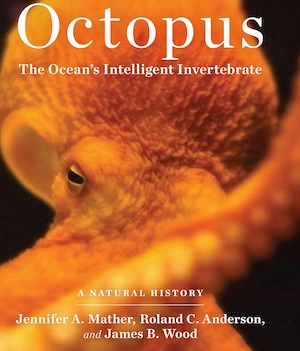
Octopus The Ocean’s Intelligent Invertebrate book cover

Octopus: The Ocean’s Intelligent Invertebrate by Jennifer A. Mather, Roland C. Anderson, and James B. Wood is a comprehensive natural history of one of the ocean’s most fascinating creatures. The book examines octopus anatomy, sensory systems, camouflage abilities, problem-solving skills, and complex behaviors, presenting them as highly intelligent invertebrates rather than simple marine animals.Drawing on decades of marine biology research, the authors explore topics such as 

learning and memory, habitat use, predator-prey interactions, reproduction, and the evolutionary position of cephalopods. Through detailed observations and scientific studies, the book highlights how octopuses challenge traditional assumptions about intelligence in invertebrates. Combining rigorous research with engaging narrative, it provides a strong biological foundation for understanding these extraordinary animals and their role in marine ecosystems.

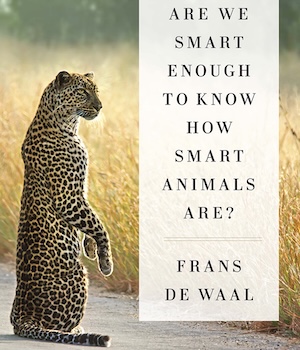
Are We Smart Enough to Know How Smart Animals Are book cover with leopard

Are We Smart Enough to Know How Smart Animals Are? by Frans de Waal explores the evolution of intelligence across species and challenges the assumption that human cognition is the ultimate benchmark for measuring animal minds. Drawing on decades of research in primatology and animal behavior, de Waal presents evidence of problem-solving, empathy, cooperation, communication, and social awareness in species ranging from apes and dolphins to birds and octopuses.

The book moves through key themes such as the history of intelligence testing in animals, the problem of human-centered bias in cognition research, social intelligence and empathy, tool use and innovation, self-awareness, and the evolutionary roots of cooperation. De Waal also critiques experimental designs that underestimate animal abilities and argues for a more biologically grounded approach to studying minds across species.

Blending scientific rigor with accessible storytelling, the book invites readers to rethink what intelligence really means and to recognize the rich cognitive lives of nonhuman animals.

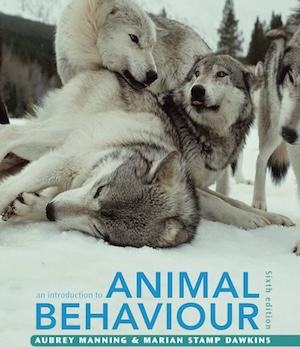
An Introduction to Animal Behaviour book cover sixth edition

An Introduction to Animal Behaviour (Sixth Edition) by Aubrey Manning and Marian Stamp Dawkins is a widely respected textbook that examines how and why animals behave the way they do. Grounded in evolutionary biology, the book explores key topics such as natural selection, learning, communication, social behavior, reproduction, and cooperationThe authors combine classical research with modern developments in behavioral science, presenting clear explanations supported by real-world 

examples from a wide range of species. With its balanced approach to theory, experimentation, and ecological context, the book provides a strong scientific foundation for students and readers seeking a deeper understanding of behavior as an adaptive biological process.

 
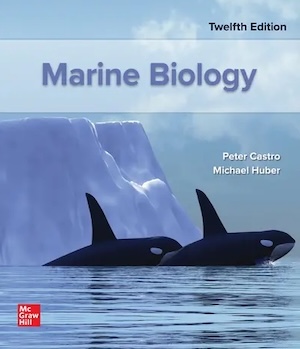
Marine Biology (Twelfth Edition) by Peter Castro & Michael Huber Cover

Marine Biology by Peter Castro and Michael Huber is a widely used undergraduate textbook that provides a thorough and accessible introduction to the biology of the oceans. The book examines marine organisms within the context of their physical, chemical, and geological environments, helping readers understand how ocean systems function as interconnected ecological networksStructured around core scientific principles, the text covers topics such as oceanography 

fundamentals, marine biodiversity, evolutionary adaptations, population dynamics, and ecosystem interactions. It also addresses pressing environmental issues, including climate change, overfishing, habitat destruction, and ocean acidification, linking biological concepts to real-world conservation challenges.

Known for its clear explanations, detailed illustrations, and strong integration of scientific research, the 12th edition incorporates updated data and recent discoveries in marine science. By combining foundational theory with contemporary case studies, Marine Biology serves as both an academic resource for students and a valuable reference for anyone seeking a deeper understanding of life beneath the ocean’s surface.

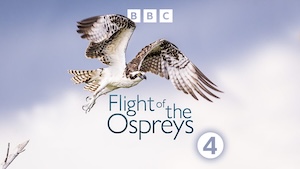
Flight of the Ospreys BBC podcast cover

Flight of the Ospreys is a BBC audio series that traces the extraordinary migratory journey of ospreys as they travel thousands of miles between breeding and wintering grounds. Blending wildlife storytelling with scientific insight, the podcast follows 

individual birds tracked by satellite, revealing the challenges they face across changing landscapes, open oceans, and international borders.

Through expert commentary from ornithologists, conservationists, and field researchers, the series explores osprey biology, migration behavior, and the conservation efforts that have helped this once-threatened raptor recover in parts of the UK. Listeners gain insight into how modern tracking technology allows scientists to monitor flight routes, survival rates, and habitat use in unprecedented detail.

By combining personal bird narratives with ecological context, Flight of the Ospreys transforms migration data into a compelling natural history story. It offers both an emotional and scientific perspective on one of nature’s most awe-inspiring journeys — the seasonal flight of a bird that connects continents.

https://www.bbc.co.uk/programmes/m001ddnd

Tracking the Planet BBC Podcast Cover

Tracking the Planet is a BBC World Service podcast that investigates how satellites, data science, and emerging technologies are reshaping the way we monitor and understand the Earth. The series explores how scientists track climate change, deforestation, 

ocean health, wildlife populations, and other environmental shifts using increasingly sophisticated global observation systems.

Through interviews with researchers, environmental experts, and technology specialists, the podcast explains how real-time data and space-based monitoring tools are influencing conservation strategies, disaster response, and climate research. Episodes highlight both the scientific breakthroughs and the global challenges involved in interpreting and applying vast streams of environmental data.

By combining investigative storytelling with accessible scientific explanation, Tracking the Planet offers listeners a deeper look at how technology is helping humanity measure — and respond to — planetary change.

https://www.bbc.co.uk/programmes/m001x54g

Uncaged podcast cover with Emily Knight at zoo entrance

Uncaged with Emily Knight is a BBC podcast that examines the urgent challenges facing wildlife and ecosystems in a rapidly changing world. Hosted by conservation advocate Emily Knight, the series explores topics such as species protection, habitat loss,

 rewilding, climate change, and the ethical dimensions of conservation. Through interviews with scientists, conservationists, policymakers, and campaigners, the podcast highlights both the scientific foundations and the human stories behind environmental action.

Rather than presenting nature as distant or abstract, Uncaged focuses on real-world conservation efforts and the difficult decisions involved in protecting biodiversity. Episodes often address the balance between economic interests, community livelihoods, and ecological responsibility, offering listeners a nuanced perspective on modern environmental debates.

By combining research-driven discussion with accessible storytelling, Uncaged encourages informed engagement with conservation issues. It is well suited for listeners who want to understand not only why biodiversity matters, but also how science, policy, and society intersect in the effort to safeguard the natural world.

https://www.bbc.co.uk/programmes/m001ddfp

Overheard at National Geographic Podcast Cover

Overheard at National Geographic is an award-winning podcast that takes listeners behind the scenes of National Geographic’s most fascinating stories. Hosted by National Geographic storytellers and editors, the show explores unexpected

discoveries, fieldwork adventures, and the human moments that unfold during scientific and journalistic expeditions around the world.

Each episode dives deeper than a typical article, revealing how researchers, photographers, and correspondents uncover new insights about wildlife, archaeology, climate science, space exploration, and diverse cultures. Listeners hear firsthand accounts of challenges in the field, surprising twists in investigations, and the curiosity-driven questions that spark groundbreaking stories.

Blending rigorous reporting with immersive storytelling, Overheard at National Geographic transforms global exploration into engaging, narrative-rich audio. It’s ideal for curious minds who want to understand not just what was discovered — but how it was discovered, and why it matters.

https://www.nationalgeographic.com/podcasts/overheard

Our Broken Planet Podcast – Natural History Museum cover

Our Broken Planet is a podcast from the Natural History Museum in London that examines the environmental challenges transforming life on Earth — from climate change and biodiversity loss to pollution and habitat destruction. Hosted by 

museum scientists and science communicators, the series draws on cutting-edge research and the institution’s vast scientific expertise to explain not only what is happening to our planet, but why.

Each episode features conversations with researchers, conservationists, and subject specialists who explore the complex systems connecting ecosystems, species, and human societies. Rather than presenting environmental issues as distant or abstract, the podcast highlights tangible evidence from fieldwork, collections-based research, and global studies. It also emphasizes potential solutions, showcasing innovative approaches in conservation biology, sustainable development, and ecological restoration.

By combining scientific rigor with accessible storytelling, Our Broken Planet helps listeners understand the scale of today’s environmental challenges while offering informed optimism rooted in research. It is ideal for curious learners who want evidence-based insight into how science is responding to the planet’s most urgent problems.

https://www.nhm.ac.uk/discover/our-broken-planet-podcast.html

Ologies with Alie Ward podcast cover

Ologies with Alie Ward is a popular science podcast hosted by author and science communicator Alie Ward. Each episode focuses on a specific “-ology” — from entomology and volcanology to primatology and thanatology — featuring in-depth 

interviews with researchers, field scientists, and subject-matter experts. With a blend of humor, thoughtful questions, and genuine curiosity, Ward makes complex scientific fields approachable without sacrificing depth or accuracy.

Launched in 2017, the podcast has built a large following thanks to its engaging format and wide-ranging topics. Episodes often explore not only the science itself but also the personal journeys of the scientists behind the research, highlighting the human side of discovery. Ologies balances rigorous information with warmth and wit, creating an accessible space for listeners who want to dive deep into specialized areas of knowledge.

By turning niche academic disciplines into lively, story-driven conversations, Ologies encourages lifelong learning and scientific literacy. It is ideal for curious listeners who enjoy thoughtful exploration of the world’s many “-ologies” — delivered with intelligence, empathy, and a touch of nerdy enthusiasm.

https://www.alieward.com/ologies

Best of Natural History Radio podcast cover with elephant

Best of Natural History Radio is a curated BBC audio collection that highlights some of the most compelling episodes from the broadcaster’s long-running natural history and science programming. Drawing from series such as BBC Radio 4’s wildlife and

environmental shows, the podcast brings together in-depth explorations of animal behavior, ecology, evolution, and conservation science in one accessible feed.

Many episodes feature experienced BBC science presenters and journalists — including voices familiar from flagship programs like The Living World and Costing the Earth — alongside researchers, field biologists, and conservation experts. The series reflects decades of BBC natural history storytelling, combining rigorous reporting with immersive field recordings and thoughtful narration.

By showcasing standout episodes from across its archive, Best of Natural History Radio offers listeners both historical perspective and contemporary scientific insight. It serves as an engaging gateway into the BBC’s rich tradition of environmental journalism, making it ideal for curious minds who appreciate detailed, research-based explorations of the living planet.

BBC Naturebang podcast cover

Naturebang is a BBC audio podcast that explores the unexpected, bizarre, and fascinating sides of the natural world. Each episode investigates curious biological phenomena, unusual animal behaviors, and surprising ecological discoveries,

blending solid scientific research with energetic, engaging storytelling. Instead of portraying nature as serene and predictable, Naturebang reveals its dramatic, competitive, and sometimes downright explosive realities.

Through expert interviews, real-world examples, and clear explanations, the podcast makes complex biological and evolutionary concepts accessible to a broad audience. Topics range from strange reproductive strategies and extreme survival adaptations to the hidden forces that shape ecosystems. By combining humor, curiosity, and scientific rigor, Naturebang transforms surprising natural phenomena into memorable learning experiences — ideal for listeners who enjoy discovering how wonderfully weird life on Earth can be.

https://bbc.com/audio/brand/m00060x0

BBC Earth Podcast cover image

BBC Earth Podcast is a nature-focused audio series that brings the wonders of the natural world to life through immersive storytelling and expert insight. Produced by BBC Studios Natural History Unit, the podcast explores fascinating topics ranging 

from animal behavior and extreme environments to evolutionary science and conservation. Each episode blends vivid sound design with compelling narration, drawing listeners into ecosystems across the globe — from deep oceans to remote rainforests.

Rather than offering quick facts alone, BBC Earth Podcast dives into the science behind wildlife stories, often featuring researchers, filmmakers, and field experts who share firsthand experiences. The result is an engaging mix of education and narrative, making complex ecological concepts accessible without losing scientific depth. Whether you’re curious about predator-prey dynamics, climate adaptation, or remarkable survival strategies, the podcast transforms cutting-edge natural history into captivating listening.

By combining rigorous research with cinematic audio production, BBC Earth Podcast turns everyday curiosity about nature into a richer understanding of the living planet — perfect for lifelong learners who prefer their science with a sense of adventure.

https://www.bbcearth.com/podcast

iNaturalist biodiversity identification and citizen science app interface

iNaturalist is a biodiversity identification and citizen science app that connects everyday nature observations with real scientific research. Developed through a collaboration between the California Academy of Sciences and the 

National Geographic Society, the platform allows users to photograph plants, animals, fungi, and other organisms, then receive identification suggestions powered by computer vision. Unlike purely automated ID tools, iNaturalist combines AI suggestions with community verification, meaning observations are reviewed and refined by knowledgeable users, researchers, and taxonomic experts.

What makes iNaturalist particularly powerful is its role in large-scale biodiversity science. Observations that reach “research-grade” status can be shared with global biodiversity databases such as the Global Biodiversity Information Facility (GBIF), supporting ecological studies, conservation planning, and species distribution research. In other words, snapping a picture of a backyard beetle or a roadside wildflower can contribute to real-world scientific datasets. The app covers a vast range of life forms — from birds and insects to mosses and marine invertebrates — making it one of the most comprehensive nature identification tools available.

Beyond identification, iNaturalist fosters a community-driven learning experience. Users can join projects, follow experts, explore species maps, and track their own life lists over time. The app turns casual curiosity into structured observation, blending AI technology with collaborative science. For anyone interested in ecology, conservation, or simply understanding the living world more deeply, iNaturalist offers not just answers — but participation in the scientific process itself.

https://www.inaturalist.org/


Merlin Bird ID bird identification app showing photo and sound ID interface

Merlin Bird ID is a science-based bird identification app developed by the Cornell Lab of Ornithology. Designed for both beginners and experienced birders, Merlin uses artificial intelligence to identify birds from photos, recorded songsor by 

answering a few simple questions about size, color, and location. The app’s sound identification feature listens to bird calls in real time and suggests likely species, making it especially useful when birds are heard but not seen.

What sets Merlin Bird ID apart is its deep integration with ornithological research and one of the largest bird databases in the world. The app draws from eBird data — a global citizen-science project — to refine its identification accuracy based on geographic location and season. Users can explore detailed species profiles that include range maps, identification tips, behavioral traits, and high-quality reference photos and audio recordings. Best of all, the app is free, making advanced bird identification tools widely accessible.

By combining image recognition, sound analysis, and data-driven filtering, Merlin Bird ID transforms birdwatching into a guided learning experience. Whether you’re identifying a backyard cardinal, a migrating warbler, or a mysterious call at dusk, Merlin offers reliable, research-backed support — essentially turning your smartphone into a pocket-sized field guide powered by modern ornithology.

https://merlin.allaboutbirds.org/

BirdNET bird sound identification app showing audio recording interface

BirdNET is a science-based bird identification app that specializes in recognizing birds by their sounds rather than their appearance. Developed by the Cornell Lab of Ornithology in collaboration with Chemnitz University of Technology, 

BirdNET uses advanced machine learning and bioacoustic analysis to identify bird species from recorded songs and calls. Users simply record a nearby bird, and the app analyzes the audio pattern to suggest likely species within seconds.

What makes BirdNET especially compelling is its strong scientific foundation. The app is connected to ongoing ornithological research, and anonymous recordings can contribute to large-scale biodiversity monitoring projects. In other words, while you’re identifying the cheerful morning singer outside your window, you may also be helping scientists track migration patterns and species distribution. The app works globally and supports thousands of bird species, making it useful for backyard birders, hikers, and serious ornithology enthusiasts alike.

BirdNET focuses primarily on sound identification rather than visual recognition, which makes it particularly valuable when birds are hidden in foliage or active at dawn and dusk. With its research-backed technology and clean, user-friendly interface, BirdNET transforms everyday bird sounds into data-rich learning moments — turning casual listening into citizen science with surprisingly little effort.

https://birdnet.cornell.edu/

Picture Fish fish identification AI app showing a fish photo and app interface

Picture Fish is an AI-powered fish identification app designed to help users quickly identify fish species using a simple photo. Whether you’re fishing at a lake, exploring coastal waters, or observing fish in an aquarium, the app analyzes the image

and suggests the most likely species within seconds. Its database includes thousands of freshwater and marine fish, making it useful for anglers, marine life enthusiasts, students, and aquarium keepers alike.

Beyond basic identification, Picture Fish provides detailed species profiles that include habitat information, behavioral traits, diet, and distinguishing physical features. For anglers, this can help clarify local species differences; for aquarium hobbyists, it supports better care decisions by explaining environmental preferences and compatibility factors. Users can also save identified species to a personal collection, gradually building their own digital fish log.

By combining visual recognition with educational content, Picture Fish transforms a quick snapshot into a learning opportunity. It functions as a convenient digital reference guide, encouraging curiosity about aquatic biodiversity while providing users with accessible, science-informed information about the fish they encounter.

https://picturefishai.com/


Picture Bird bird identification AI app showing a bird photo and app interface

Picture Bird is an AI-powered bird identification app designed to help users recognize bird species quickly and accurately using photos or bird sounds. By uploading an image or recording a bird’s call, the app analyzes visual patterns or acoustic 

signatures to identify the species within seconds. Its database covers a wide range of birds from different regions, making it useful for backyard birdwatchers, hikers, and travelers who want to put a name to the birds they encounter.

Beyond identification, Picture Bird serves as an accessible learning tool for ornithology enthusiasts. Each identified bird comes with detailed species profiles that include physical traits, habitat preferences, migration behavior, and vocalization patterns. Users can save sightings to a personal collection, gradually building their own digital bird journal. The app also highlights distinguishing features that help users learn how similar species differ — a skill birders usually develop only after long field experience.

With its combination of image recognition, sound analysis, and educational content, Picture Bird turns casual bird sightings into meaningful learning moments. It is especially well suited for beginners who want reliable guidance without carrying bulky field guides, while still offering enough depth to keep more experienced birdwatchers engaged and curious.

https://picturebirdai.com/

Picture Mushroom mushroom identification AI app showing a mushroom photo and app interface

Picture Mushroom is an AI-powered mushroom identification app designed to help users identify mushrooms quickly and responsibly using photos. By taking or uploading a clear image, the app analyzes visual features such as cap shape, color, gills, and stem 

structure to suggest the most likely species. Its database spans a wide range of edible, inedible, and toxic mushrooms, making it a useful companion for hikers, foragers, and anyone curious about fungi they encounter in nature.

Beyond basic identification, Picture Mushroom emphasizes education and safety. The app provides detailed species profiles, including habitat information, seasonal growth patterns, and clear warnings about poisonous look-alikes — a critical feature in the mushroom world, where mistakes can be dangerous. Users can save identified mushrooms to a personal collection, turning casual discoveries into a growing field guide. While a free version covers essential features, premium access unlocks unlimited identifications and deeper reference material for more frequent or serious users.

By combining rapid image recognition with clear safety messaging and accessible explanations, Picture Mushroom helps demystify fungi without encouraging reckless foraging. It’s best viewed as a learning and identification aid rather than a substitute for expert verification — a smart, science-aware tool for anyone who wants to explore mushrooms with curiosity and caution.

https://picturemushroom.com

We’re currently preparing detailed resources and expert insights for this section. Check back soon for carefully researched content. We’re currently preparing detailed resources and expert insights for this section. Check back soon for carefully researched

We’re currently preparing detailed resources and expert insights for this section. Check back soon for carefully researched content.

PictureThis plant identification app

PictureThis is an AI-powered plant identification app that feels like having a friendly botanist in your pocket. At its core, the app uses sophisticated image recognition to identify plants instantly from photos — from common garden flowers to mysterious weeds

— with reported accuracy above 98% across over 400,000 species. Simply snapping a clear picture is all it takes to get the plant’s name, family, and other botanical details, which makes PictureThis ideal for both curious nature walkers and serious gardeners alike.

But PictureThis doesn’t stop at just naming flora. It also offers personalized care guidance and health insights, telling you how often to water, what light the plant prefers, and even diagnosing common plant diseases from leaf blemishes. Users can log identified plants into a “Garden” collection for later reference, receive warnings about toxic species for pets and kids, and build care schedules that help keep plants thriving. While many features are free, premium options unlock more advanced care tools and deeper insights.

For everyday plant lovers, this combination of rapid plant ID, care recommendations, and disease diagnostics makes PictureThis one of the most comprehensive plant apps available. Its intuitive interface and detailed results help turn plant curiosity into confidence — whether you’re trying to name a roadside wildflower or figure out why your favorite houseplant is sulking.

https://www.picturethisai.com/

Picture Insect insect identification AI app showing an insect photo and app interface

Picture Insect is an AI-driven insect identification app that brings the fascinating world of bugs right to your fingertips. By snapping or uploading a photo of any insect, spider, moth, beetle, butterfly, or other arthropod, the app analyzes the image and tells

you what species it most likely is within seconds. With a database covering thousands of species and an intuitive interface, Picture Insect makes identifying critters from the garden, trail, or backyard as easy as taking a picture. Users can also learn about each species’ characteristics, behavior, and sometimes even whether they pose risks like bites or stings.

Beyond identification, Picture Insect functions as a digital insect encyclopedia, offering rich learning resources with photos, FAQs, and taxonomic details that appeal to curious naturalists and casual explorers alike. You can track insects you’ve identified in your own personal collection, making it a handy tool for students, hobbyists, and anyone interested in entomology. While the core features are free, premium options unlock unlimited identifications and access to expert consultations, which is useful for more serious study or frequent explorers of the bug world.
https://pictureinsect.com/