

When I first learned about cultured eggs, I was genuinely excited. The idea sounded almost inevitable: producing egg proteins without industrial poultry farming, without massive hatcheries, and without the animal welfare problems that surround modern egg production. Considering how intensive egg and bird-related food systems have become, the possibility of animal-free eggs felt less like science fiction and more like a meaningful technological step forward.
But the deeper I looked into cultured eggs and precision-fermented egg proteins, the more complicated the picture became. Most of what currently exists is not a full lab-grown egg at all, but isolated egg proteins produced through microbial fermentation. And the reason quickly became clear: eggs are extraordinarily difficult to recreate.
An egg is not just a flavor or a source of protein. It is a highly organized biological system that binds, foams, emulsifies, thickens, and transforms during cooking in ways food scientists still struggle to fully imitate. In some ways, recreating a whole egg may even be harder than recreating meat.
That tension between scientific promise and biological complexity is what this article explores.
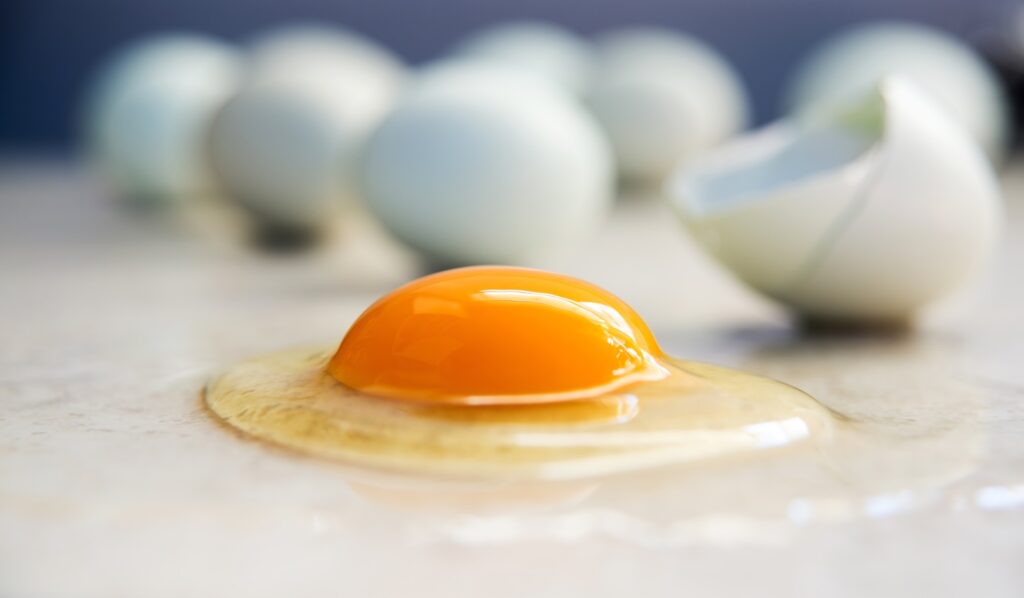
What are cultured eggs actually made from?
Most cultured egg products are currently made from engineered egg proteins produced through precision fermentation rather than from complete artificial eggs.
Companies typically modify microorganisms such as yeast, fungi, or bacteria with DNA instructions for chicken egg proteins. These microorganisms grow inside fermentation tanks and produce proteins normally found in eggs, especially ovalbumin, the main protein in egg whites.
After fermentation, the proteins are purified and processed into food ingredients used for foaming, binding, gelling, and stabilizing in processed foods.
Current evidence suggests the cultured egg industry is focused mainly on producing isolated functional proteins rather than recreating complete eggs with yolks, shells, and layered biological structures.
Why are companies focusing on egg-white proteins instead of whole eggs?
Egg-white proteins are easier to manufacture and commercially useful in food production.
Proteins such as ovalbumin provide important industrial functions in baking and processed foods. Producing one purified protein through fermentation is much simpler than recreating a full egg system containing fats, membranes, emulsifiers, micronutrients, and multiple interacting proteins.
This is why current regulatory filings and commercial products focus mostly on egg-white ingredients rather than complete cultured eggs.
References
- Beck et al. — Scientific and technological challenges of recombinant egg protein production
- DTU Technical University of Denmark — Recombinant microbial production of milk and egg proteins
- FDA — GRAS Notice GRN 1249 for fermentation-derived ovalbumin
Why are eggs scientifically difficult to recreate?
Eggs are difficult to recreate because they perform many physical and chemical functions at once during cooking.
They bind ingredients, trap air, create foams, emulsify fats and water, thicken mixtures, and build structure in baked foods. Reproducing one of these properties is possible with isolated proteins, but reproducing all of them simultaneously is far more difficult.
This is why cultured egg research currently focuses mainly on selected proteins such as ovalbumin rather than complete egg replication.
Why are whole cultured eggs much harder to make than isolated egg proteins?
Whole eggs are structurally complex systems rather than single ingredients.
A complete cultured egg would require rebuilding interacting proteins, fats, emulsifiers, membranes, minerals, and layered internal structures that respond differently during cooking.
Current literature mainly supports recombinant egg protein production, not full cultured egg construction.
References
- Beck et al. — Scientific and technological challenges of recombinant egg protein production
- DTU Technical University of Denmark — Recombinant microbial production of milk and egg proteins
- FDA — GRAS Notice GRN 1249 for fermentation-derived ovalbumin
Can cultured egg proteins work at commercial scale?
Cultured egg proteins appear most commercially realistic as industrial food ingredients rather than as direct replacements for shell eggs.
Current regulatory filings and company materials focus mainly on processed foods that require specific egg functions such as foaming, binding, gelling, and texture stabilization. Applications include baked goods, sauces, snacks, and industrial food manufacturing.
Large-scale production is still limited by fermentation efficiency, purification costs, protein yield, and manufacturing consistency.
Why are startups focusing on industrial food ingredients instead of consumer eggs?
Replacing one egg function is simpler than recreating the full sensory and cooking behavior of a whole egg.
Food manufacturers may only need a protein that foams or binds effectively. Consumer eggs, however, must reproduce taste, texture, appearance, yolk behavior, and cooking transformations simultaneously.
This makes industrial ingredients a more practical first commercial market.
References
- FDA — GRAS Notice GRN 1249 for fermentation-derived ovalbumin
- Beck et al. — Scientific and technological challenges of recombinant egg protein production
- DTU Technical University of Denmark — Recombinant microbial production of milk and egg proteins
- Onego Bio — official company materials
- The EVERY Company — official company materials
How are cultured eggs being regulated and discussed publicly?
Cultured egg proteins are currently being regulated mainly as novel food ingredients produced through precision fermentation.
The clearest public regulatory example is FDA GRAS Notice GRN 1249, which covers fermentation-derived ovalbumin intended for use in processed foods. Current regulatory progress focuses on isolated egg proteins rather than complete cultured eggs.
Public discussion, however, often mixes together cultured eggs, vegan egg substitutes, and other “lab-grown” foods.
Why do people confuse cultured eggs with vegan egg substitutes?
Many consumers use terms such as “animal-free eggs,” “vegan eggs,” and “lab-grown eggs” interchangeably even though the technologies differ significantly.
Plant-based egg substitutes are usually made from ingredients such as mung bean or soy proteins, while cultured egg proteins are produced by engineered microorganisms carrying DNA instructions for chicken egg proteins.
Public reactions often focus more on whether the food feels “natural” than on the underlying production method itself.
References
- FDA — GRAS Notice GRN 1249 for fermentation-derived ovalbumin
- Onego Bio — FDA GRAS announcement
- Reddit discussion — hen-free eggs and precision fermentation
- Reddit discussion — precision-fermented eggs and vegan confusion
Cultured eggs are still a surprisingly underexplored field. While researching this article, one of the most striking findings was how little scientific literature currently exists beyond recombinant egg proteins and early commercial development. Many broader questions about cultured eggs remain unanswered, from consumer behavior to large-scale practicality.
In a way, that gap is encouraging. It leaves space for researchers, food scientists, and future investigations to explore a field that is still in its scientific infancy.
This article was created through research, curiosity, and a deep love for science, technology and of course, chickens by Niloofar Moharrami for Nested Questions.