
Mammals (2024)
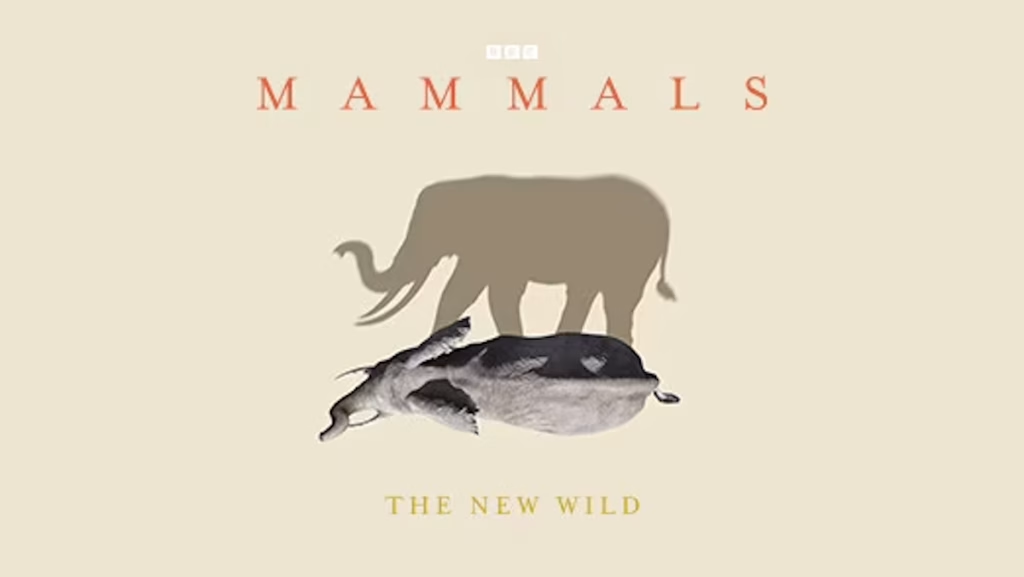
Category: Wildlife & Animals Format: Series Production: BBC Studios Natural History Unit / BBC
Narrator / Presenter: David Attenborough Main Focus: The evolutionary success of mammals across land, sea, forest, deserts, cities, and the night world.
Lives, behavior, and ecosystems of animals across the planet, revealing biodiversity and survival strategies in their natural environments. This selection is carefully curated to include only highly regarded, well-made, science-based documentaries—from the earliest productions to the present. A modern Attenborough series built around the defining adaptations that made mammals extraordinarily successful. It blends intimate behavior, high-end cinematography, and a global scope, while keeping the science accessible and emotionally engaging.
Episodes
Episode 1: Dark (2024)
Explores the nocturnal world and the sensory tricks mammals use after sunset. Bats, big cats, rodents, and other night specialists show how darkness opens ecological opportunities.
Notable detail: Emphasizes low-light imaging and modern camera technology.
Episode 2: The New Wild (2024)
Looks at mammals adapting to human-dominated landscapes, from suburbs to megacities. The episode frames urban ecology not as a side story, but as a major frontier of mammalian survival.
Episode 3: Water (2024)
Follows mammals that hunt, migrate, cool, hide, or raise young in rivers, wetlands, coasts, and seas. It highlights how even strongly terrestrial lineages repeatedly return to water.
Episode 4: Cold (2024)
Examines the insulating, behavioral, and social strategies mammals use in snow, ice, and extreme seasonal cold. Fur, fat, dens, and timing all become part of the story.
Episode 5: Heat (2024)
Focuses on heat stress, aridity, and water scarcity in deserts and other hot environments. It shows how body size, activity patterns, and physiology shape survival under extreme temperature pressure.
Episode 6: Forest (2024)
Moves into wooded habitats, where camouflage, climbing, gliding, and social communication help mammals navigate a crowded three-dimensional world. Forest mammals are presented as both ancient specialists and highly dynamic innovators.
Seven Worlds, One Planet (2019)
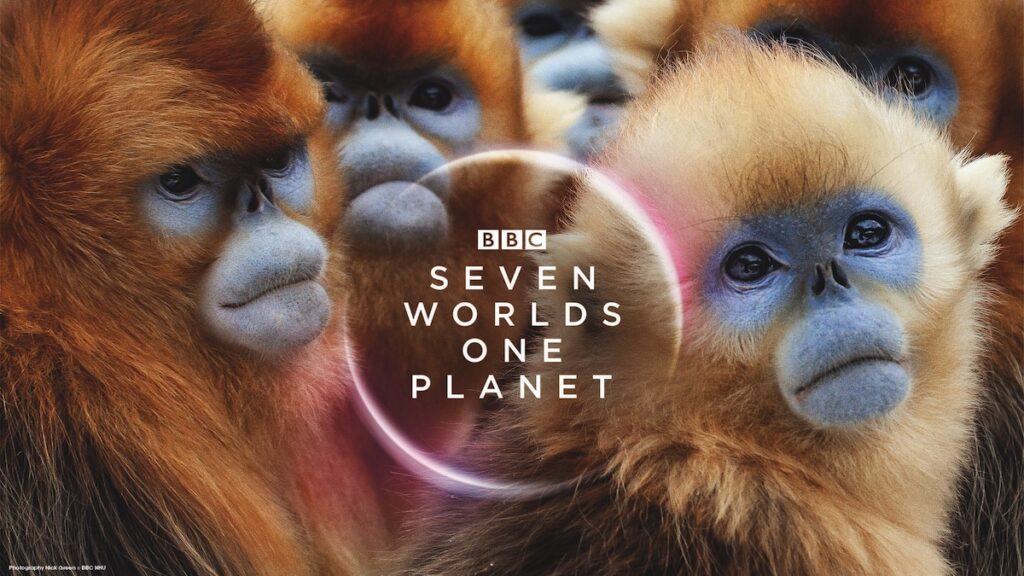
Category: Wildlife & Animals Format: Series Production: BBC Studios Natural History Unit / BBC
Narrator / Presenter: David Attenborough Main Focus: How each continent shaped its own wildlife through geography, climate, and isolation.
This globe-spanning series treats continents as evolutionary engines, showing how geography and deep time created distinct animal worlds. It is one of the clearest recent examples of large-scale biogeography translated into compelling television.Widely admired for its scope and cinematic polish; especially effective at linking animal behavior to continental history.
Episodes
Episode 1: Antarctica (2019)
A portrait of the coldest continent, where penguins, seals, seabirds, and marine life endure a seasonal world of abundance and hardship. The episode balances spectacle with the ecological fragility of the polar system.
Episode 2: Asia (2019)
Tracks wildlife across the planet’s largest continent, from tropical forests to mountains and deserts. Asia’s scale becomes the key theme, with species adapting to enormous environmental variety.
Episode 3: South America (2019)
Follows animals shaped by rainforest, Andes, coasts, and wetlands in one of Earth’s richest biological realms. The episode captures both exuberant diversity and the evolutionary consequences of isolation.
Episode 4: Australia (2019)
Shows how long isolation fostered unusually distinctive wildlife, from marsupials to birds with highly specialized behavior. The storytelling emphasizes adaptation in a continent defined by extremes.
Episode 5: Europe (2019)
Explores a heavily modified continent where wildlife persists in patchwork landscapes shaped by people and history. It makes the case that natural history can still be thrilling in human-dominated settings.
Episode 6: North America (2019)
Moves through Arctic, prairie, coast, desert, and forest systems to show a continent of dramatic seasonal movement and ecological contrast. Migration and scale are central themes.
Episode 7: Africa (2019)
Closes with the continent most associated with wildlife filmmaking, but does so with fresh attention to local adaptation and landscape diversity. It presents Africa as many ecological worlds rather than one generic safari image.
Planet Earth II (2016)

Category: Wildlife & Animals Format: Series Production: BBC Natural History Unit / BBC
Narrator / Presenter: David Attenborough Main Focus: Animal life across six major habitat types, filmed with next-generation 4K and stabilized camera systems.
A landmark sequel that updated the visual grammar of nature television with ultra-high-definition imaging, drones, and more agile field production. It remains one of the clearest examples of how technical innovation can deepen, rather than distract from, ecological storytelling. Historically important as a major technical step forward for natural-history filmmaking and one of the most acclaimed wildlife series of its era.
Episodes
Episode 1: Islands (2016)
Shows how isolation on islands produces unusual behaviors and intense evolutionary pressures. Species that thrive here often do so with little room for error.
Episode 2: Mountains (2016)
Examines the thin air, steep terrain, and unstable weather of high-elevation ecosystems. Mountain wildlife emerges as supremely specialized and often seasonally trapped.
Episode 3: Jungles (2016)
Takes viewers into dense tropical forest systems where light, space, and communication are contested resources. The episode emphasizes sensory overload, hidden lives, and constant competition.
Episode 4: Deserts (2016)
Focuses on heat, aridity, and scarcity, showing how behavior and timing can matter as much as anatomy. Desert animals are portrayed as strategic survivors rather than merely tough ones.
Episode 5: Grasslands (2016)
Follows animals in open landscapes shaped by grazing, fire, predators, and migration. Speed, vigilance, and social coordination dominate this world.
Episode 6: Cities (2016)
Turns to urban wildlife and shows how animals exploit noise, light, traffic, buildings, and food waste. It helped normalize the idea that wildlife documentary storytelling belongs in cities too.
The Life of Mammals (2002–2003)
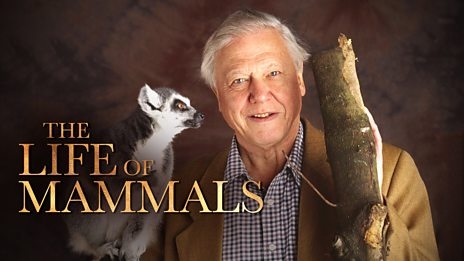
Category: Wildlife & Animals Format: Series Production: BBC Natural History Unit / BBC
Narrator / Presenter: David Attenborough Main Focus: The evolution, diversity, and adaptive radiation of the mammal class.
This Attenborough survey remains one of the strongest single overviews of mammalian evolution and natural history. It is more taxonomically organized than newer BBC series, which makes it especially useful for readers who want a science-forward framework. A key entry in Attenborough’s specialized ‘Life’ surveys; historically important for bringing evolutionary context to mainstream wildlife television.
Episodes
Episode 1: A Winning Design (2002)
Introduces the basic mammalian blueprint and traces the early branches of the class. Egg-laying monotremes and marsupials help explain how mammals became such a versatile lineage.
Episode 2: Insect Hunters (2002)
Looks at small mammals that feed on invertebrates, including shrews and related groups. The episode shows how insect-eating lifestyles shaped body form, metabolism, and behavior.
Episode 3: Plant Predators (2002)
Covers herbivorous mammals and the digestive and behavioral strategies needed to process difficult plant foods. Grazers, browsers, and migrators reveal the ecological power of plant-based diets.
Episode 4: Chisellers (2002)
Turns to rodents, whose incisors and rapid reproduction helped make them one of the most successful mammal groups. Their ecological reach is shown to be vast rather than merely small-animal biology.
Episode 5: Meat Eaters (2002)
Profiles carnivorous mammals and the many ways predation can be specialized. Cats, dogs, hyenas, and related hunters demonstrate that carnivory is a broad ecological category, not a single strategy.
Episode 6: Opportunists (2002)
Explores omnivorous mammals that succeed by versatility rather than narrow specialization. Intelligence, dexterity, and dietary flexibility become recurring themes.
Episode 7: Return to the Water (2003)
Examines marine mammals and the return of certain mammal lineages to aquatic life. Seals, sea lions, manatees, and whales underscore how dramatically mammals can transform across evolutionary time.
Episode 8: Life in the Trees (2003)
Looks at arboreal mammals and the anatomical compromises of climbing, gliding, grasping, and leaping. Forest canopies are presented as a demanding but opportunity-rich habitat.
Episode 9: Social Climbers (2003)
Studies monkeys and social organization, intelligence, and communication. Group life is shown as a central mammalian strategy with both benefits and costs.
Episode 10: Food for Thought (2003)
Closes with apes and human evolution, drawing comparisons across cognition, dexterity, and social complexity. It broadens the series from mammals as animals to mammals as a lineage that includes us.
The Trials of Life (1990)
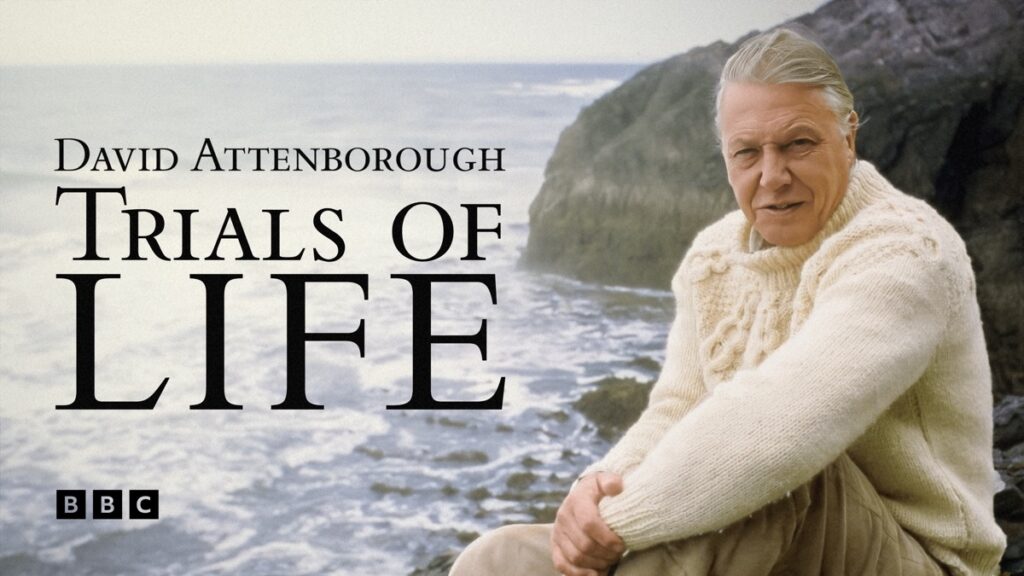
Category: Wildlife & Animals Format: Series Production: BBC Natural History Unit / BBC
Narrator / Presenter: David Attenborough Main Focus: Animal behavior across the major stages and tasks of life.
Less habitat-based than many later series, this classic work organizes nature around behavior: birth, feeding, movement, conflict, parenting, and survival. It remains one of the most intellectually satisfying Attenborough productions because behavior becomes the thread that unites the whole animal world. A major landmark in behavioral natural history television and the concluding part of Attenborough’s original Life trilogy.
Episodes
Episode 1: Arriving (1990)
Examines how animals begin life, from eggs and birth to the earliest hazards of existence. Reproduction is shown as both a biological necessity and an ecological gamble.
Episode 2: Growing Up (1990)
Follows juveniles learning to feed, avoid danger, and navigate their environments. The episode is especially strong on how instinct and learning work together.
Episode 3: Finding Food (1990)
Surveys the many ways animals obtain energy, from grazing to ambush to scavenging. The central theme is that feeding strategy shapes nearly everything else in an animal’s life.
Episode 4: Hunting and Escaping (1990)
Sets predators and prey in evolutionary dialogue, showing offense and defense as a long-running arms race. Speed, venom, camouflage, group defense, and deception all enter the story.
Episode 5: Finding the Way (1990)
Looks at navigation, migration, and orientation across long and short distances. Animals are shown solving spatial problems in ways that remain scientifically fascinating.
Episode 6: Home Making (1990)
Explores nests, burrows, dens, webs, and other forms of animal architecture. Shelter becomes a story about engineering, reproduction, and defense.
Episode 7: Living Together (1990)
Focuses on cooperation, symbiosis, and social life. The episode reveals that partnership in nature ranges from mutually beneficial alliances to exploitation.
Episode 8: Fighting (1990)
Shows conflict over territory, mates, food, and rank. It treats combat not as constant violence but as ritualized behavior shaped by risk and reproductive value.
Episode 9: Friends and Rivals (1990)
Examines hierarchy, alliance, competition, and social tension within groups. The episode makes animal society feel both familiar and biologically distinct.
Episode 10: Talking to Strangers (1990)
Explores interspecies signaling, deception, and communication beyond simple calls. Nature emerges as a dense information network.
Episode 11: Courting (1990)
Looks at mate choice, display, ornament, and reproductive competition. Sexual selection is made vivid through behavior rather than abstract theory.
Episode 12: Continuing the Line (1990)
Closes with parental care and the final biological imperative of passing genes onward. The episode reinforces the series’ core idea that life is a chain of problems animals solve in many different ways.
Life on Earth (1979)
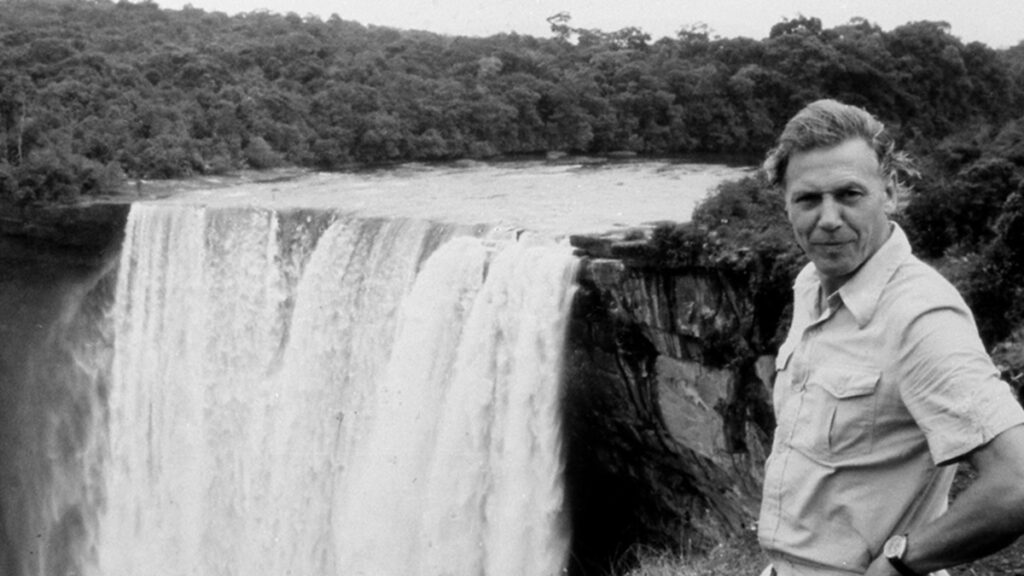
Category: Wildlife & Animals Format: Series Production: BBC Natural History Unit / BBC
Narrator / Presenter: David Attenborough Main Focus: The history of life on Earth, from early beginnings to the rise of humans.
One of the foundational works of television natural history, Life on Earth helped define the modern Attenborough format: global travel, evolutionary storytelling, and direct explanation to camera. Even decades later, it still feels ambitious, lucid, and historically important. A milestone series in wildlife television and one of the most influential natural-history documentaries ever made.
Episodes
Episode 1: The Infinite Variety (1979)
Introduces life’s extraordinary diversity and the series’ evolutionary perspective. The opening establishes the central question of how such variety came to be.
Episode 2: Building Bodies (1979)
Looks at the emergence of multicellular life and the evolution of more complex body plans. Structure becomes the doorway into evolutionary innovation.
Episode 3: The First Forests (1979)
Explores the colonization of land and the rise of early terrestrial ecosystems. Plants and early land animals become part of a world being built from scratch.
Episode 4: The Swarming Hordes (1979)
Focuses on invertebrates, especially arthropods, whose diversity and abundance dominate much of animal life. The episode shows why small creatures run so much of the planet.
Episode 5: Conquest of the Waters (1979)
Traces vertebrate life in the water and the rise of fishes. It highlights the anatomical innovations that would later support life on land.
Episode 6: Invasion of the Land (1979)
Follows the movement of vertebrates out of water and onto land. The episode makes adaptation feel like a long, contingent process rather than a ladder of progress.
Episode 7: Victors of the Dry Land (1979)
Centers on reptiles and their success in drier terrestrial environments. The egg, scales, and water balance are presented as evolutionary turning points.
Episode 8: Lords of the Air (1979)
Examines birds and the conquest of flight. The episode combines evolutionary history with behavior and anatomy in a characteristically clear Attenborough style.
Episode 9: The Rise of the Mammals (1979)
Shows how mammals expanded after the age of reptiles and diversified into many lifestyles. Warm-bloodedness, parental care, and specialization take center stage.
Episode 10: Theme and Variations (1979)
Continues the mammal story by comparing how one basic body plan diversified into many ecological forms. Evolution here is variation on a theme rather than constant reinvention.
Episode 11: The Hunters and the Hunted (1979)
Looks at predation, defense, and the ecological relationships that bind animals together. Evolution is portrayed as a dialogue between survival strategies.
Episode 12: Life in the Trees (1979)
Turns to primates and the adaptations of tree-dwelling life. Hands, eyes, depth perception, and sociality begin to point toward a human story.
Episode 13: The Compulsive Communicators (1979)
Concludes with humans as a communicative, cultural species embedded within natural history. It is notable for placing humanity inside, not outside, the story of life.