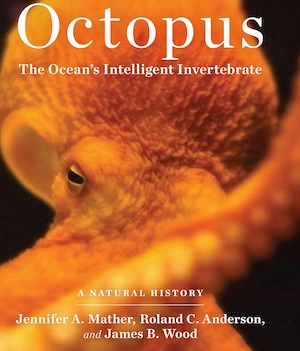

Secrets of the Octopus (2024)
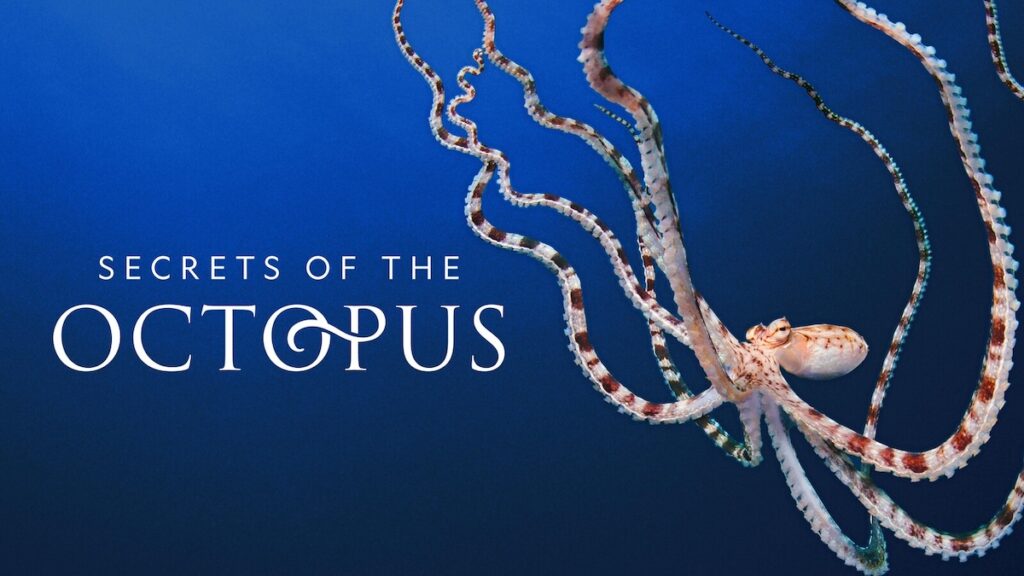
Category: Oceans & Marine Life Format: Series Production: National Geographic
Narrator / Presenter: Narrated by Paul Rudd; featuring Alex Schnell Main Focus: The intelligence, camouflage, problem-solving, and life history of octopus species around the world.
A focused, charismatic marine series that uses the octopus as an entry point into cognition, behavior, and convergent evolution. It manages to stay genuinely science-based while remaining highly watchable for a broad audience. Part of National Geographic’s Secrets of… strand; especially useful for readers interested in animal intelligence and cephalopod behavior.
Episodes
Episode 1: Shapeshifters (2024)
Introduces the octopus as a master of rapid visual and behavioral transformation. Camouflage becomes more than a trick: it is a window into cephalopod sensory ecology and survival.
Episode 2: Masterminds (2024)
Examines learning, memory, exploration, and problem-solving in octopuses. The episode asks what intelligence looks like in a lineage very distant from mammals and birds.
Episode 3: Social Networkers (2024)
Challenges the cliché of the octopus as purely solitary by exploring mating, signaling, and context-dependent interaction. It paints a more nuanced picture of octopus social life.
Secrets of the Whales (2021)
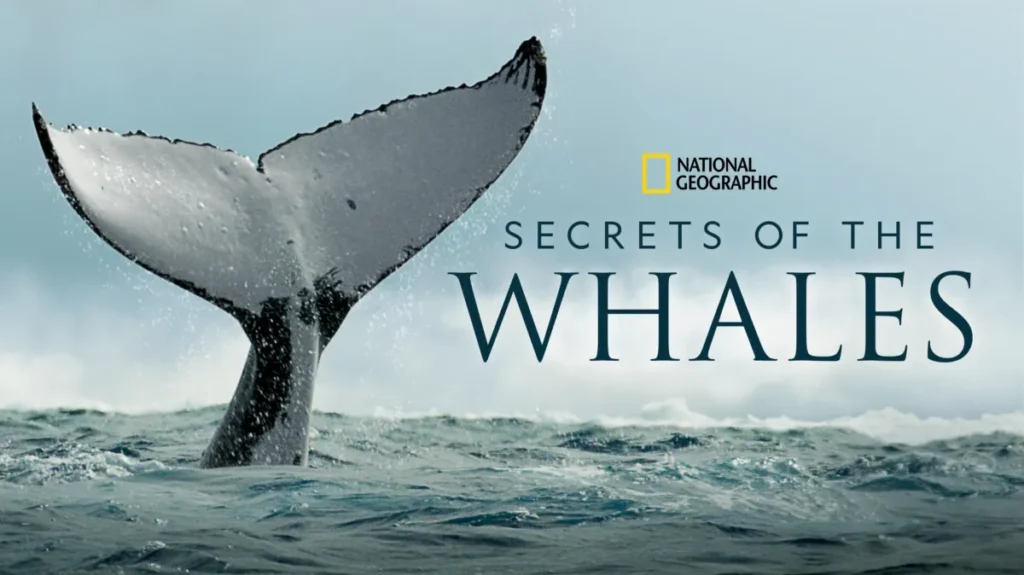
Category: Oceans & Marine Life Format: Series Production: National Geographic
Narrator / Presenter: Narrated by Sigourney Weaver; executive producer James Cameron Main Focus: The family life, communication, migration, and culture of whales and dolphins.
This series treats whales not just as large marine animals, but as deeply social, culturally patterned beings. It is especially strong when it moves beyond awe and into communication, learned behavior, and matrilineal life. Well regarded for combining strong imagery with a more culture-centered view of cetacean science.
Episodes
Episode 1: Orca (2021)
Follows killer whales through hunting traditions, family bonds, and ecological specialization. It shows that orca behavior is culturally diverse rather than uniform.
Episode 2: Humpback (2021)
Explores the migrations, songs, feeding strategies, and maternal care of humpback whales. The episode balances spectacle with a serious interest in communication and movement ecology.
Episode 3: Beluga (2021)
Centers on belugas in Arctic and sub-Arctic waters, where social cohesion and acoustic communication are crucial. Seasonal ice and changing northern conditions shape the story.
Episode 4: Sperm Whale (2021)
Looks at deep-diving sperm whales and the social lives of their clans. Their world of clicks, foraging, and long maternal bonds is presented as both alien and intelligible.
Blue Planet II (2017)
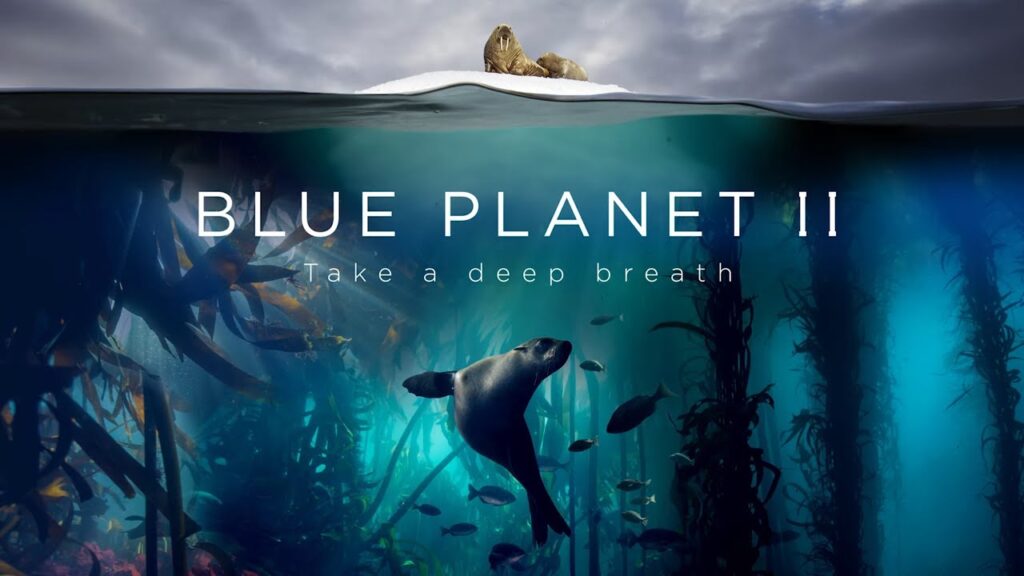
Category: Oceans & Marine Life Format: Series Production: BBC Natural History Unit / BBC
Narrator / Presenter: David Attenborough Main Focus: Marine life from coasts to abyssal depths, with a stronger emphasis on modern ocean threats than the 2001 original.
This sequel combines classic undersea spectacle with a more explicit ecological warning about pollution, climate pressure, and human impact. It helped bring ocean conservation concerns into mainstream public conversation without losing the joy of discovery. Culturally significant for the so-called Blue Planet effect, especially around plastic pollution awareness.
Episodes
Episode 1: One Ocean (2017)
A wide-angle introduction to ocean life, linking tropical shallows, open water, and polar seas. The ocean is presented as one connected system rather than disconnected habitats.
Episode 2: The Deep (2017)
Descends into the dark ocean, where pressure, scarcity, and bioluminescence define life. The deep sea emerges as both mysterious and ecologically consequential.
Episode 3: Coral Reefs (2017)
Celebrates reef biodiversity while hinting at the fragility of these crowded marine cities. Competition, color, and symbiosis drive the episode.
Episode 4: Big Blue (2017)
Moves into the open ocean, where scale, migration, and fast-moving predators dominate. Life here is sparse in one sense, yet globally important.
Episode 5: Green Seas (2017)
Looks at productive coastal systems such as kelp forests and seagrass habitats. These green oceans are shown as nurseries, feeding grounds, and conservation priorities.
Episode 6: Coasts (2017)
Focuses on shores where land and sea constantly reshape one another. Animals must live with tides, waves, exposure, and highly variable food supply.
Episode 7: Our Blue Planet (2017)
A concluding conservation episode that brings together the science of change and the human responsibility attached to it. The tone is sober but not fatalistic.
The Blue Planet (2001)
Category: Oceans & Marine Life Format: Series Production: BBC Natural History Unit / BBC
Narrator / Presenter: David Attenborough Main Focus: A sweeping survey of the world’s oceans and marine habitats.
The original Blue Planet was a turning point in marine documentary filmmaking, bringing broad ocean science and rarely seen marine behavior to a mass audience. Its structure is classical and habitat-based, making it especially useful as a foundational reference. Historically important as one of the great marine documentary landmarks of the early twenty-first century.
Episodes
Episode 1: The Blue Planet (2001)
Introduces the sea as the defining environmental system of Earth. It establishes the series’ broad ecological frame and sets up later habitat-specific episodes.
Episode 2: The Deep (2001)
Takes viewers into the abyss and beyond, where cold, darkness, and pressure shape life. The deep ocean becomes a world of extraordinary specialization.
Episode 3: Open Ocean (2001)
Explores the vast pelagic realm where drifting plankton, schooling fish, seabirds, and large predators meet. Survival depends on movement and timing at enormous scale.
Episode 4: Frozen Seas (2001)
Looks at life in polar oceans shaped by ice, seasonality, and short bursts of productivity. Marine mammals and seabirds appear within a broader system driven by cold-water ecology.
Episode 5: Seasonal Seas (2001)
Centers on temperate seas where annual cycles strongly structure reproduction, feeding, and migration. Change itself becomes the main ecological force.
Episode 6: Coral Seas (2001)
Profiles reef systems as dense, colorful, intensely competitive habitats. The episode highlights symbiosis, defense, and architectural complexity.
Episode 7: Tidal Seas (2001)
Examines intertidal and nearshore worlds governed by tides and exposure. Life here is rhythmic, opportunistic, and physically challenged.
Episode 8: Coasts (2001)
Closes with continental edges where marine and terrestrial systems intersect. The episode reinforces how much ocean life depends on margins and transitions.
Oceans (2009)
Category: Oceans & Marine Life Format: Standalone film Production: Disneynature / Galatée Films
Narrator / Presenter: Narration varies by release Main Focus: A cinematic feature-length portrait of marine life, from reefs and schooling fish to sharks, whales, and drifting pelagic life.
This theatrical documentary prioritizes visual immersion and emotional scale, but it is still grounded in real marine ecology and behavior. It works especially well as a broad introductory ocean film for readers who want something more cinematic than episodic television.