
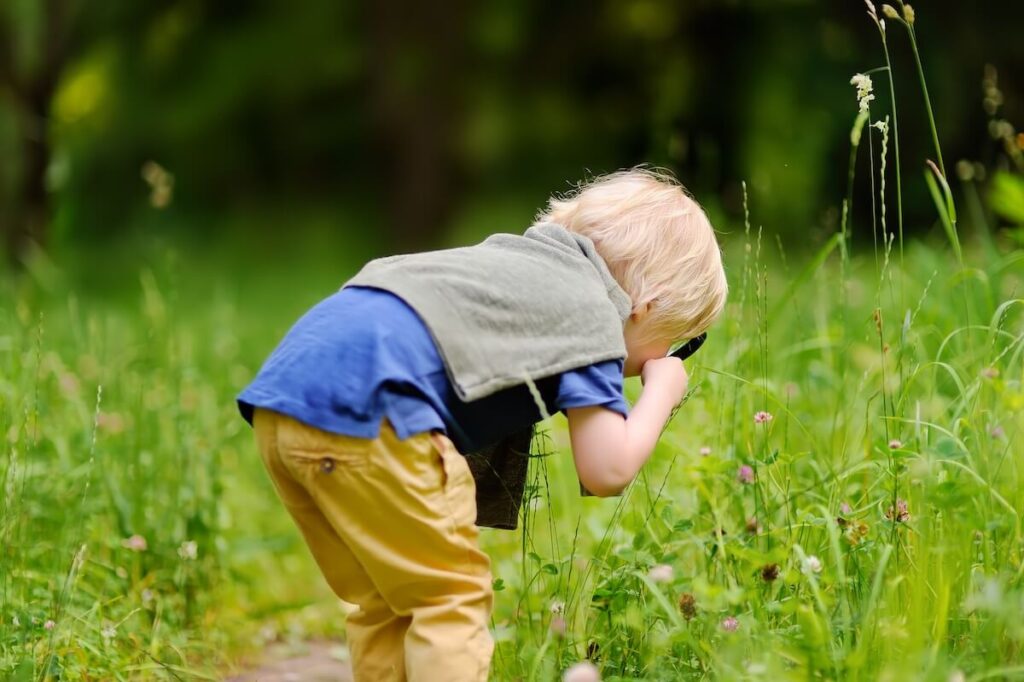
Why Early Childhood Is the Perfect Time to Start Learning from Nature
Children aged 2–4 thrive on short, high-wonder moments: “I looked → I discovered something new.” At this stage, the goal is not complexity but curiosity. The best nature learning tools are simple, durable, and sensory-rich, helping children notice patterns, textures, and changes in their environment.
These early experiences build the foundation for lifelong observation, patience, and respect for nature.
Seeing Nature Better (Visual Discovery Tools)
Big Handheld Magnifier
What it reveals: Leaf veins, bark texture, sand grains, and moss details—small features that reward slowing down.
Why it matters: Builds attention and curiosity without requiring fine motor skills.
Brands:
- Carson
- Any large, durable magnifier designed for children
Bug Viewer (Temporary Observation Jar)
What it reveals: Insect body parts such as legs, antennae, and wings without direct handling.
Why it matters: Encourages gentle curiosity while reducing harm to insects.
Brands:
- Educational Insights
- Carolina Biological Supply
Stand Magnifier (Hands-Free Observation)
What it reveals: Small insects and textures directly on surfaces like leaves or soil.
Why it matters: Promotes still observation and reduces the need to pick things up.
Brand:
- Carson
Hearing and Sensing Nature (Audio & Sensory Tools)
Sound Spotting (No Equipment Needed)
What it develops: Awareness of different sounds—birds, wind, footsteps—and their direction.
Why it matters: Builds early listening skills and attention without needing devices.
Recording and Reflecting (Learning Tools)
Clipboard and “I Noticed” Pages
What it develops: Turning observations into drawings or simple descriptions.
Why it matters: Strengthens memory and helps children revisit their experiences.
Interaction and Exploration Tools
Soft Brush (Gentle Guiding Tool)
What it develops: Moving small insects safely without touching them directly.
Why it matters: Teaches respect for living things and prevents accidental harm.
Tip: Use a clean, very soft paintbrush.
Specimen Jar (Short-Term Observation Only)
What it develops: Observing natural objects or insects briefly before releasing them.
Why it matters: Reinforces the idea of temporary observation rather than collecting.
Brands:
- Educational Insights
- Carolina Biological Supply
Sky Exploration Tools
Moon and Sky Observation (No Equipment)
What it develops: Awareness of moon phases, cloud movement, and changing skies.
Why it matters: Builds early curiosity about patterns in nature.
Red Light Awareness (Intro to Night Observation)
What it develops: Understanding that bright light affects night vision and animals.
Why it matters: Introduces respectful nighttime observation habits.
Ocean and Freshwater Exploration Tools
Aquascope (Underwater Viewer)
What it reveals: Fish, plants, and movement beneath the water surface without disturbance.
Why it matters: Encourages calm observation instead of splashing or chasing.
Brands:
- Educational Insights
Supportive Attire for Learning
Waterproof Outerwear and Boots
Learning function: Keeps children comfortable, allowing longer observation time.
Why it matters: Discomfort quickly ends curiosity at this age.
Brands:
- Reima
- Didriksons
Final Thought
At this stage, the goal is simple: create moments of discovery. The right tools don’t overwhelm—they gently guide attention, helping children notice more and begin building a lifelong connection with nature.